
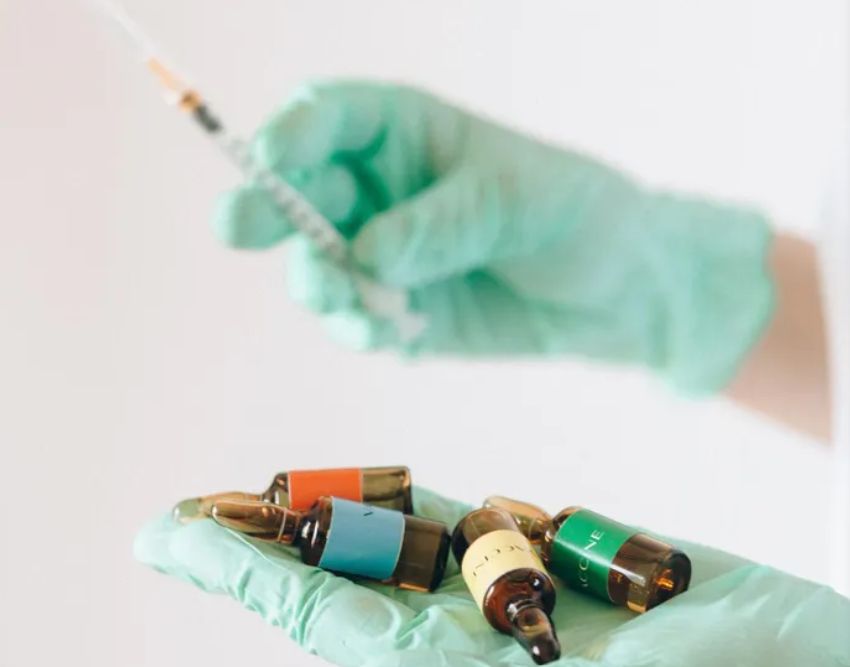
A Senegalese pharmaceutical company, Teranga Pharma, has begun producing Drepaf, a locally made generic version of hydroxyurea, marking the first time this frontline sickle cell drug has been manufactured on African soil. It is a modest-looking achievement, tablets in 500mg and 100mg doses, launched quietly in November 2025, but its implications are anything but small.
Why This Is a Bigger Deal Than It Looks
Sickle cell disease is not a rare disorder in Africa; it is a defining public health crisis. The World Health Organization’s African region estimates that more than 300,000 babies are born each year with severe forms of sickle cell and related blood disorders, the vast majority in low- and middle-income countries, and researchers focused on sub-Saharan Africa alone put the figure closer to 400,000 infants annually. Nigeria and the Democratic Republic of Congo carry the largest share of that burden. Without early treatment, close to half of African children born with the disease do not survive to their tenth birthday, often dying quietly, undiagnosed, in homes and clinics that lack the tools to name what is killing them.
Against that backdrop, Teranga Pharma’s achievement reads less like a corporate press release and more like a correction of a historic failure. As CEO Mouhamadou Sow put it, doctors have long been forced to treat the consequences of sickle cell rather than its root cause, simply because the one drug proven to reduce painful crises, transfusions, and death was never reliably available. Drepaf changes the starting point of that equation. By manufacturing locally, Teranga Pharma cuts out the shipping delays, currency volatility, and import markups that have made hydroxyurea a luxury item for many Senegalese families rather than routine medicine.
The Gene-Therapy Comparison Nobody Should Ignore
It is worth placing this against the treatment landscape in wealthier countries. In late 2023, the United States approved two gene therapies for sickle cell disease, Casgevy and Lyfgenia, hailed globally as scientific breakthroughs capable of functionally curing the condition. They are extraordinary science. They are also priced at $2.2 million and $3.1 million per patient respectively figures so far removed from the economic reality of most sickle cell patients, in the US and especially in Africa, that they exist more as proof-of-concept than as public health tools. Even in one of the world’s richest economies, uptake has been slow precisely because of cost and the intensive hospital infrastructure the therapies require.
Drepaf will never replace gene editing as a cure. But it does something gene therapy cannot yet do at scale: it reaches people. A daily generic tablet, priced for a Senegalese household budget rather than an American insurance ceiling, is the difference between a treatment that exists in theory and one a family can actually put in a child’s hand every morning. That is the quieter, more radical kind of medical progress, not the most dramatic breakthrough, but the most usable one.
Sovereignty, Not Just Supply
There is also a deeper story here about who gets to decide how Africa treats African diseases. For years, access to hydroxyurea depended on decisions made in pharmaceutical boardrooms thousands of kilometres away. Local production changes that dynamic: dosage formats, packaging, and patient information can now be adapted to how Senegalese doctors and families actually use medicine, rather than retrofitted from a foreign product. It is a small but meaningful assertion of health sovereignty, echoing broader efforts across the continent, from vaccine manufacturing in Rwanda and South Africa to generic antiretroviral production, to stop treating local pharmaceutical capacity as a luxury and start treating it as infrastructure.
None of this erases the scale of the challenge. One factory in Dakar cannot supply a continent where hundreds of thousands of children are born with this disease every year, and screening, diagnosis, and specialist care remain badly under-resourced almost everywhere. But Drepaf is proof that the solution to Africa’s sickle cell crisis does not have to wait for a multi-million-dollar cure imported from abroad. Sometimes progress looks less like a laboratory miracle and more like a pill, made at home, that someone can actually afford to take.
Written by:
*Sesona Mdlokovana
Associate at BRICS+ Consulting Group
Africa Specialist
figures so far removed from the economic reality of most sickle cell patients, in the US and especially in Africa, that they exist more as proof-of-concept than as public health tools. Even in one of the world’s richest economies, uptake has been slow precisely because of cost and the intensive hospital infrastructure the therapies require.
Drepaf will never replace gene editing as a cure. But it does something gene therapy cannot yet do at scale: it reaches people. A daily generic tablet, priced for a Senegalese household budget rather than an American insurance ceiling, is the difference between a treatment that exists in theory and one a family can actually put in a child’s hand every morning. That is the quieter, more radical kind of medical progress, not the most dramatic breakthrough, but the most usable one.
Sovereignty, Not Just Supply
There is also a deeper story here about who gets to decide how Africa treats African diseases. For years, access to hydroxyurea depended on decisions made in pharmaceutical boardrooms thousands of kilometres away. Local production changes that dynamic: dosage formats, packaging, and patient information can now be adapted to how Senegalese doctors and families actually use medicine, rather than retrofitted from a foreign product. It is a small but meaningful assertion of health sovereignty, echoing broader efforts across the continent, from vaccine manufacturing in Rwanda and South Africa to generic antiretroviral production, to stop treating local pharmaceutical capacity as a luxury and start treating it as infrastructure.
None of this erases the scale of the challenge. One factory in Dakar cannot supply a continent where hundreds of thousands of children are born with this disease every year, and screening, diagnosis, and specialist care remain badly under-resourced almost everywhere. But Drepaf is proof that the solution to Africa’s sickle cell crisis does not have to wait for a multi-million-dollar cure imported from abroad. Sometimes progress looks less like a laboratory miracle and more like a pill, made at home, that someone can actually afford to take.
Written by:
*Sesona Mdlokovana
Associate at BRICS+ Consulting Group
Africa Specialist