More than a company listing
The significance of the Dangote IPO extends beyond the refinery itself.
Africa has long faced a financing challenge. Major infrastructure projects often depend heavily on foreign loans, development finance institutions or external investors. While these sources remain important, they can leave African economies vulnerable to global financial conditions and shifting investor sentiment.
The Dangote listing offers a different model. It represents an opportunity for African pension funds, institutional investors and ordinary citizens to participate directly in one of the continent’s largest industrial projects. In many ways, it reflects a growing belief that Africa’s development can increasingly be financed from within.
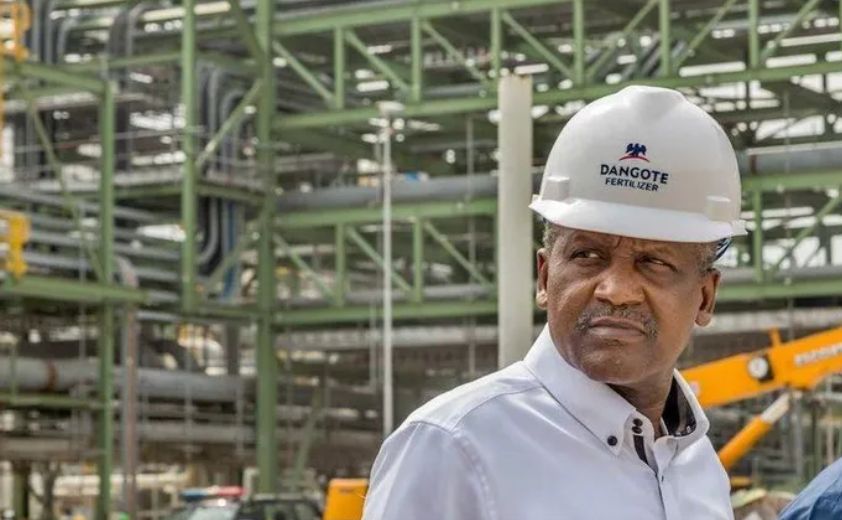
The refinery, which began operations in 2024 and has a refining capacity of about 650,000 barrels per day, was built at a cost of roughly $20 billion and is already among the largest refining facilities in the world. Plans are now underway to expand capacity further, with some projections targeting 1.4 million barrels per day by 2028.
Why African markets should care
For decades, many of Africa’s stock exchanges have struggled with limited liquidity, relatively few large listings and low levels of public participation compared to global markets.
A transaction of this scale could help change perceptions.
The proposed IPO would account for a meaningful share of the Nigerian stock market and has already generated interest from investors and exchanges across the continent, including South Africa, Kenya, Ghana, Egypt and Rwanda.
The broader implication is that successful African companies may increasingly choose to raise capital on African exchanges rather than looking exclusively to international markets. This would strengthen domestic financial systems while creating more opportunities for African investors to participate in the continent’s growth.
The development is particularly relevant given the increasing emphasis on economic self-reliance and regional integration. Just as the African Continental Free Trade Area seeks to improve the movement of goods and services, stronger capital markets can improve the movement of investment across borders.
A test of investor confidence
The IPO is also being viewed as a test of confidence in African industrialisation.
For years, critics argued that large-scale manufacturing and industrial projects could not compete effectively in Africa because of infrastructure constraints, financing challenges and regulatory hurdles. The Dangote refinery was itself considered by many to be overly ambitious when construction began.
Today, the refinery supplies fuel across Africa and exports to international markets, demonstrating that large industrial projects can be developed and operated successfully on the continent.
If investors respond positively to the listing, it could encourage similar projects in sectors such as energy, manufacturing, logistics and mining.
What it means for Africa’s future
Perhaps the most important aspect of the Dangote listing is what it says about the evolution of African economies.
Historically, Africa has often been viewed as a destination for aid, loans and foreign investment. Increasingly, however, the conversation is shifting towards African ownership, African capital and African-led development.
Strong capital markets are essential for this transition. They allow savings to be transformed into productive investment, helping businesses grow while creating jobs and economic opportunities.
The planned IPO will not solve Africa’s financing challenges overnight. The continent still faces significant investment gaps in infrastructure, energy and industrial development. However, it demonstrates that African financial markets are becoming capable of supporting projects that were once considered too large or too risky.
In that sense, the Dangote listing is about more than raising $5 billion. It is about whether Africa’s capital markets can evolve into engines of development capable of financing the continent’s ambitions from within. If successful, it may be remembered not only as Africa’s largest IPO, but as a milestone in the maturation of African finance itself.
*Dr Iqbal Survé
Past chairman of the BRICS Business Council and co-chairman of the BRICS Media Forum and the BRNN
*Sesona Mdlokovana
Associate at BRICS+ Consulting Group
Africa Specialist
**The Views expressed do not necessarily reflect the views of Independent Media or IOL.
** MORE ARTICLES ON OUR WEBSITE https://bricscg.com/ (https://bricscg.com/)
** Follow @ (https://x.com/brics_daily)brics_daily (https://x.com/brics_daily)on Twitter for daily BRICS+ updates and instagram @brics_daily (https://www.instagram.com/brics_daily?igsh=bmhvbTd0YzA4a2wx)