

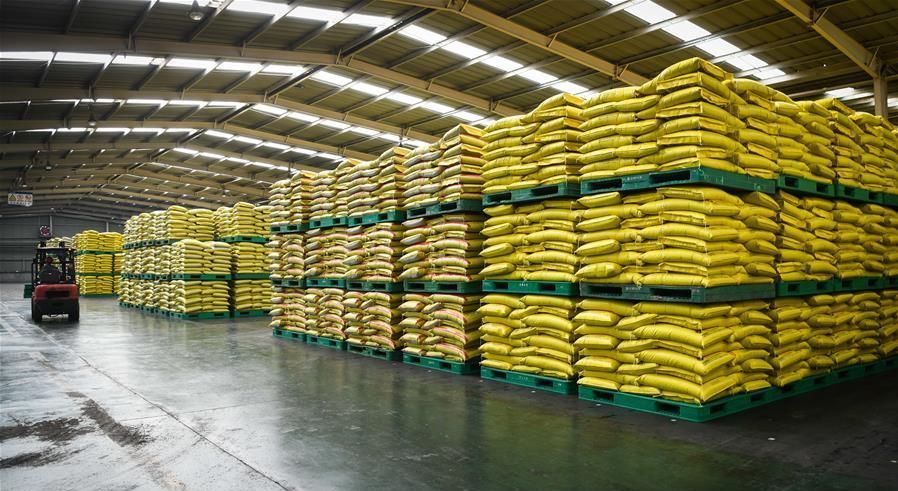
For decades, discussions about geopolitical risk have centred on oil. Every major conflict in the Middle East has been analysed through the lens of energy security, shipping lanes and crude prices. Yet a quieter strategic challenge is emerging, one that could prove even more consequential for developing economies. Fertiliser is rapidly becoming one of the world’s most important geopolitical commodities, with profound implications for food security, inflation and economic stability across the Global South.
Modern agriculture is inseparable from nitrogen fertilisers such as urea and ammonia. These products underpin crop yields for staples including maize, rice, wheat and sorghum, feeding billions of people every year. Unlike many manufactured goods, fertiliser shortages cannot simply be absorbed by delaying purchases. Missing an application season can reduce harvests for an entire year, affecting food availability, farm incomes and national inflation simultaneously.
This vulnerability has become increasingly apparent as geopolitical conflicts spread beyond traditional military theatres and begin disrupting critical industrial supply chains. Energy infrastructure, natural gas facilities and maritime shipping routes have all become targets in regional conflicts, exposing how interconnected the world’s food system has become. Since natural gas is the primary feedstock for nitrogen fertiliser production, any disruption to gas markets quickly cascades into agricultural markets.
The consequences are particularly severe for countries that rely heavily on imported fertiliser. Across Africa and South Asia, governments have spent years expanding agricultural productivity to improve food security and reduce rural poverty. Those gains are now increasingly exposed to geopolitical events taking place thousands of kilometres away.
For countries such as Kenya, Ethiopia, Bangladesh and India, fertiliser imports are not merely commercial transactions, they are strategic necessities. Millions of smallholder farmers depend on affordable fertiliser to sustain crop yields, yet they operate on extremely narrow profit margins. Even modest increases in fertiliser prices can force farmers to reduce application rates, resulting in lower harvests and higher food prices months later.
The impact extends far beyond agriculture. Higher food prices contribute directly to inflation, placing pressure on central banks to tighten monetary policy. Governments often respond by expanding fertiliser subsidies or food assistance programmes, increasing fiscal burdens at a time when many developing economies are already grappling with elevated debt levels. What begins as a supply-chain disruption can therefore evolve into a broader macroeconomic challenge affecting growth, public finances and political stability.
The situation also highlights an often-overlooked dimension of energy security. Natural gas is no longer important solely because it powers homes and industries; it has become an essential input for global food production. This creates a dual dependency in which disruptions to gas markets simultaneously threaten electricity generation, industrial production and agricultural output. As geopolitical tensions continue to affect global energy infrastructure, fertiliser markets are likely to experience greater volatility than in previous decades.
For the BRICS grouping and the wider Global South, these developments reinforce the importance of building more resilient supply chains. Several BRICS members already occupy influential positions within global agricultural and fertiliser markets. Russia is among the world’s largest fertiliser exporters, while China remains a major producer despite periodically adjusting export policies to prioritise domestic supply. Brazil is one of the world’s largest fertiliser consumers, reflecting the importance of agricultural production to its economy. India, meanwhile, has become one of the world’s largest importers of nitrogen fertilisers, making reliable access a strategic priority.
This creates opportunities for deeper South-South cooperation. Investment in regional fertiliser production, expanded natural gas processing capacity, diversified import sources and improved transport infrastructure could reduce dependence on a handful of vulnerable supply routes. Institutions such as the New Development Bank may also have a role in financing strategic agricultural infrastructure that strengthens long-term food security.
Climate change adds another layer of complexity. Extreme weather events are already placing pressure on agricultural productivity across many developing countries. If climate shocks occur alongside prolonged disruptions to fertiliser supplies, the combined impact on harvests could be far greater than either challenge alone. Food security is therefore becoming an issue that sits at the intersection of climate resilience, industrial policy and geopolitical strategy.
The emerging lesson is clear: the next major global commodity shock may not originate in oil alone. Fertiliser has become a strategic asset that underpins economic stability, agricultural productivity and national security. For policymakers across the Global South, protecting access to agricultural inputs is no longer simply an agricultural objective, it is an essential component of economic resilience in an increasingly uncertain geopolitical environment.
Written by:
*Dr Iqbal Survé
Past chairman of the BRICS Business Council and co-chairman of the BRICS Media Forum and the BRNN
*Chloe Maluleke
Associate at BRICS+ Consulting Group
Russia & Middle East Specialist
**The Views expressed do not necessarily reflect the views of Independent Media or IOL.
** MORE ARTICLES ON OUR WEBSITE https://bricscg.com/ (https://bricscg.com/)
** Follow @ (https://x.com/brics_daily)brics_daily (https://x.com/brics_daily)on Twitter for daily BRICS+ updates and instagram @brics_daily (https://www.instagram.com/brics_daily?igsh=bmhvbTd0YzA4a2wx)