
The escalating conflict in the Gulf is no longer just a geopolitical story. It has become a manufacturing story. For North Africa and the wider Mediterranean industrial corridor, the disruption of key shipping routes and energy flows is exposing how vulnerable regional production systems remain to external shocks. What began as a security crisis around the Strait of Hormuz has quickly evolved into a direct threat to manufacturing output, industrial costs and supply-chain stability.
For manufacturers across Egypt, Morocco and Tunisia in particular, the impact is already being felt through rising input costs, delayed shipments and mounting uncertainty around production schedules. With major container lines suspending transits and rerouting cargo around the Cape of Good Hope, lead times have lengthened significantly and freight costs have surged. This is precisely the kind of shock that modern manufacturing systems are least equipped to absorb.
Supply chain pressure is now an industrial risk
The most immediate challenge is not only oil prices, although those remain central. Crude prices moving towards and beyond the $100 per barrel mark place direct pressure on electricity generation, transport and factory operating costs across import-dependent economies.
But from a manufacturing perspective, the more significant issue is the disruption of intermediate goods.
North African industrial zones, particularly in Egypt and Morocco, rely heavily on imported machinery parts, electronics, chemicals and industrial feedstocks sourced from Asia and the Gulf. Automotive assembly, packaging, pharmaceuticals and food processing all depend on predictable shipping routes and just-in-time inventory systems.Once those routes are disrupted, the consequences move quickly from logistics to production.
Factories are forced to hold more stock, tying up working capital. Smaller firms with limited access to credit often cannot afford this adjustment, leaving them exposed to production stoppages. Larger manufacturers may absorb the cost temporarily, but margins narrow and output slows.
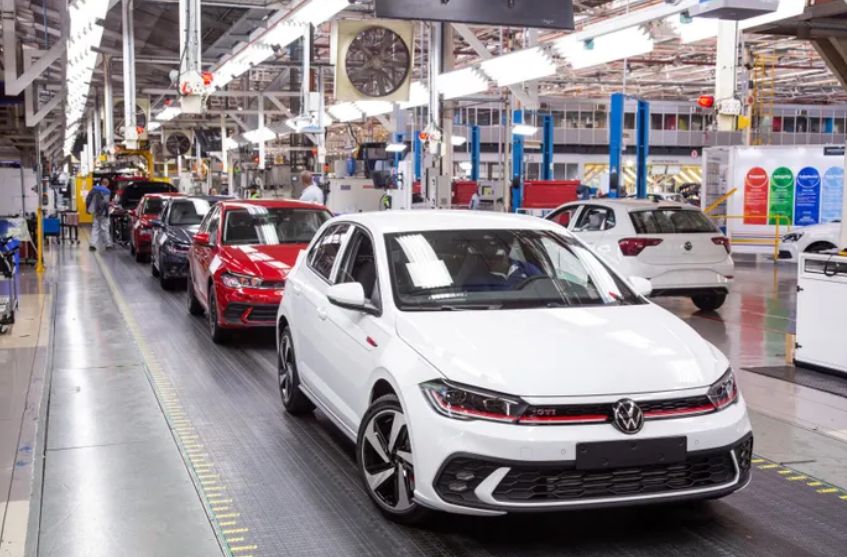
Morocco’s automotive sector is a clear example. As one of the continent’s most important manufacturing hubs, its export-led model depends on the smooth movement of components through global supply chains. Delays in semiconductors, wiring systems and mechanical parts can quickly slow vehicle assembly lines and reduce export volumes. This is where geopolitical risk becomes an industrial competitiveness issue.
Energy shocks are feeding manufacturing inflation
The second pressure point is energy. Manufacturing is inherently energy-intensive, whether in metals, cement, fertiliser, food processing or automotive assembly. When Gulf disruptions constrain oil and gas flows, factories across North Africa face a double burden: higher fuel costs and more expensive imported raw materials.
This inflationary effect spreads far beyond transport.
Fertilisers, petrochemicals, plastics and industrial chemicals all rely on hydrocarbon-linked supply chains. As Reuters and other market analysts have warned, the conflict is already affecting trade in fertiliser and industrial inputs across Africa. For agro-processing manufacturers, this is particularly serious.
Food manufacturers depend on stable agricultural supply, which in turn relies on affordable fertiliser and diesel. Rising input costs at farm level ultimately feed into higher costs for milling, packaging and food processing plants. In practical terms, this means the industrial impact of the Gulf conflict will extend well beyond ports and into domestic manufacturing ecosystems. The risk is that temporary geopolitical disruption becomes persistent cost inflation.
A structural lesson for regional manufacturing
In my view, the current crisis highlights a deeper structural issue: North Africa’s manufacturing base remains too externally dependent.
Too many industries still rely on long, fragile supply chains for essential components, feedstocks and energy inputs. This leaves local production systems exposed to shocks that originate thousands of kilometres away.
The long-term lesson is clear.
Regional manufacturing resilience must now become a policy priority. This means investing in local supplier ecosystems, regional trade corridors, strategic industrial reserves and more diversified energy partnerships.
It also strengthens the case for intra-African industrial integration under the AfCFTA framework, particularly in intermediate goods and agro-processing.
The Gulf conflict may eventually stabilise, but its effects on manufacturing could last much longer. Supply chains take months, sometimes years, to fully recover after disruption. For North Africa, this is no longer simply a trade issue. It is a test of industrial resilience.
Written By:
Chloe Maluleke
Associate, BRICS+ Consulting Group
Russia & Middle East Specialist
**The Views expressed do not necessarily reflect the views of Independent Media or IOL.
** MORE ARTICLES ON OUR WEBSITE https://bricscg.com/ (https://bricscg.com/)
** Follow @ (https://x.com/brics_daily)brics_daily (https://x.com/brics_daily)on Twitter for daily BRICS+ updates and instagram @brics_daily (https://www.instagram.com/brics_daily?igsh=bmhvbTd0YzA4a2wx)