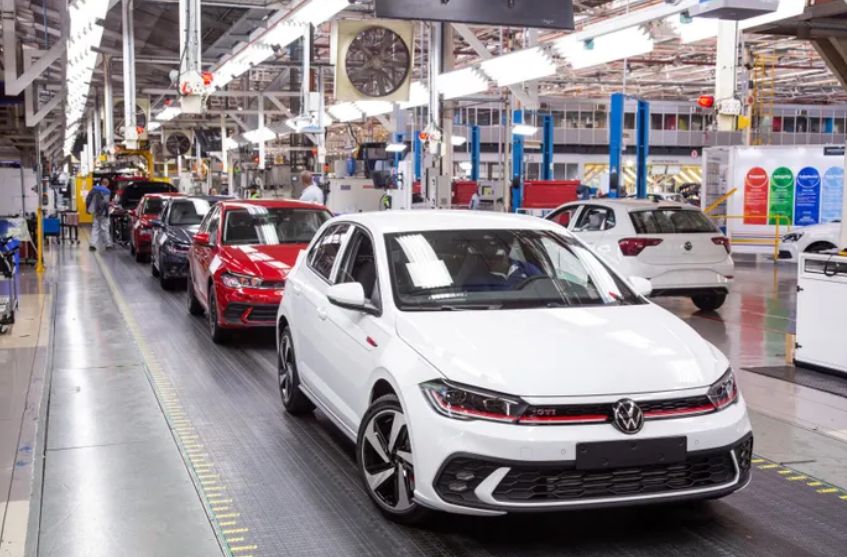

There is a number that captures the scale of Japan’s automotive reckoning with unusual clarity: $28 billion. That is the combined cost, in tariff exposure, EV write-downs and emissions-related restructuring charges absorbed by Japan’s major carmakers across the fiscal year ended March 2026. It is a figure that covers Toyota, Honda, Nissan, Mazda, Subaru and Mitsubishi, and it reflects losses generated not by product failures or strategic miscalculations alone, but by the velocity of policy change in their single most important market.
The headline casualty is Honda, whose results for the year mark one of the most significant reversals in Japanese corporate history. The company posted a net loss of ¥423.9 billion, roughly $2.7 billion , its first annual loss since becoming a publicly listed company in 1957. Behind that number sits a write-down of approximately ¥2.5 trillion tied to the wholesale restructuring of its electric vehicle programme: three North American EV models cancelled before a single car reached a customer, the Ohio EV Hub partially repurposed for hybrid and combustion production, and a joint EV venture with Sony quietly dissolved. Honda’s CEO Toshihiro Mibe has been candid about what drove these decisions. Slower-than-expected EV demand, the rollback of US environmental regulations, reduced federal incentives, and mounting pressure from Chinese competitors in markets where Honda had expected to grow, all of it converged in the same fiscal year.
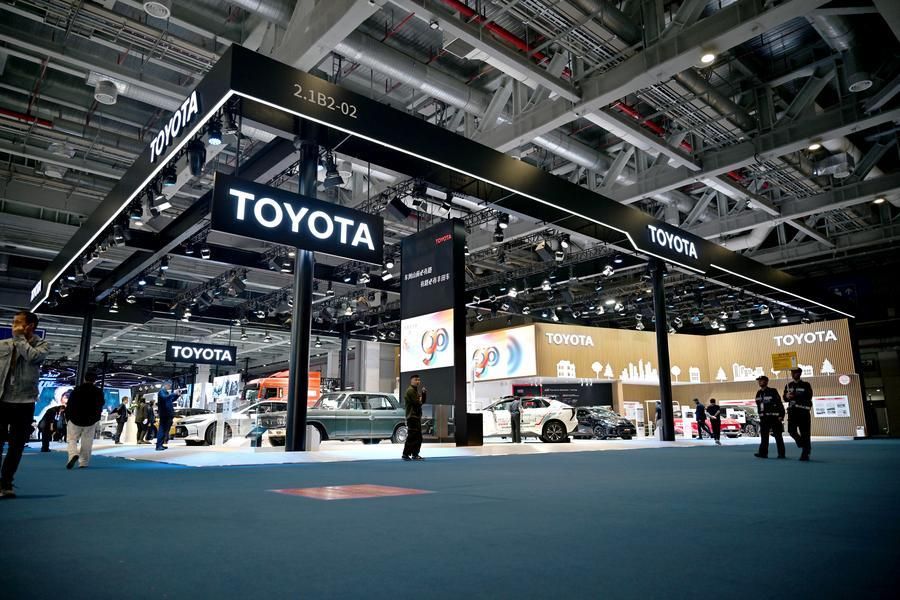
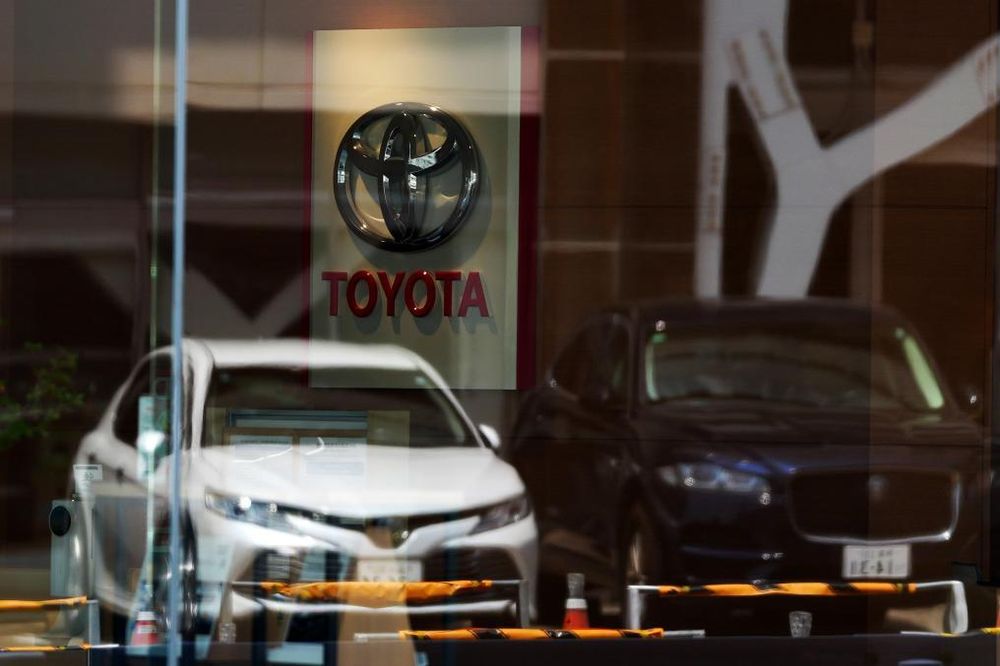
Toyota’s situation is different in degree but structurally similar. Its North American operations swung to a rare loss, pulling group profit down for a third consecutive year, with tariff-related charges estimated at ¥1.45 trillion. The company’s saving grace has been hybrids, global hybrid sales rose around 9% over the period, and Toyota’s decades-long investment in the technology is now functioning as a genuine financial buffer against the EV market’s turbulence. Across the industry, that buffer is increasingly being recognised as a competitive advantage rather than a hedge. Nissan and Mazda, less insulated by hybrid portfolios and more dependent on direct Japan-to-US exports, posted outright net losses. Mazda declined to issue a financial forecast at all, citing the tariff environment as too unpredictable to model.
The deeper issue is what these results reveal about the structural relationship between policy environments and long-cycle industrial investment. Automotive product development operates on timelines of five to ten years. A vehicle programme committed to in 2022 reflects assumptions about market conditions, regulatory frameworks and competitive dynamics that may look very different in 2026. When those assumptions are disrupted not by market forces but by policy reversals, changes to EV incentives, emissions standard rollbacks, new tariff regimes, the financial consequences are particularly difficult to absorb because they were, by definition, outside the planning model.
Honda’s Mibe articulated this plainly, noting that future investment decisions would need to treat political uncertainty as a structural variable rather than a background risk. That is a significant statement from the head of one of the world’s largest manufacturers. It points toward a future in which Japanese automakers and arguably all global OEMs with significant US exposure, build more conservatism into their capital allocation, maintain greater production flexibility, and resist committing to single-technology programmes on the timescales that have historically defined the industry.
The strategic response taking shape is already visible. Both Toyota and Honda are converging on a hybrid-first approach for North America that defers full EV commitment to a later window without abandoning it. Honda has outlined a pipeline of 13 next-generation hybrid models. Toyota continues to project over 5 million hybrid units globally in its forward guidance. It is not a retreat from the energy transition; it is a recalibration of its pace and geography, made rational by a market environment that has shifted faster than any planning cycle could accommodate.
There are also early signs of consolidation within the Japanese industry itself. Nissan and Honda are reported to be in discussions around shared production arrangements for pickup trucks at underutilised US facilities, rebuilding a working relationship after merger talks collapsed in February. Toyota is expected to deepen collaboration with Mazda and Subaru. The tariff pressure that is costing the industry billions is simultaneously accelerating the kind of supply chain integration and shared-platform thinking that might, over time, produce a more resilient Japanese automotive architecture for the North American market.
The $28 billion loss is the short-term story. The longer story is how an industry defined by precision planning and long investment horizons adapts to an era in which policy can move faster than a production line. Japan’s carmakers did not cause this environment.
Written by:
*Chloe Maluleke
Associate at BRICS+ Consulting Group
Russia & Middle East Specialist
**The Views expressed do not necessarily reflect the views of Independent Media or IOL.
** MORE ARTICLES ON OUR WEBSITE https://bricscg.com/ (https://bricscg.com/)
** Follow @ (https://x.com/brics_daily)brics_daily (https://x.com/brics_daily)on Twitter for daily BRICS+ updates and instagram @brics_daily (https://www.instagram.com/brics_daily?igsh=bmhvbTd0YzA4a2wx)