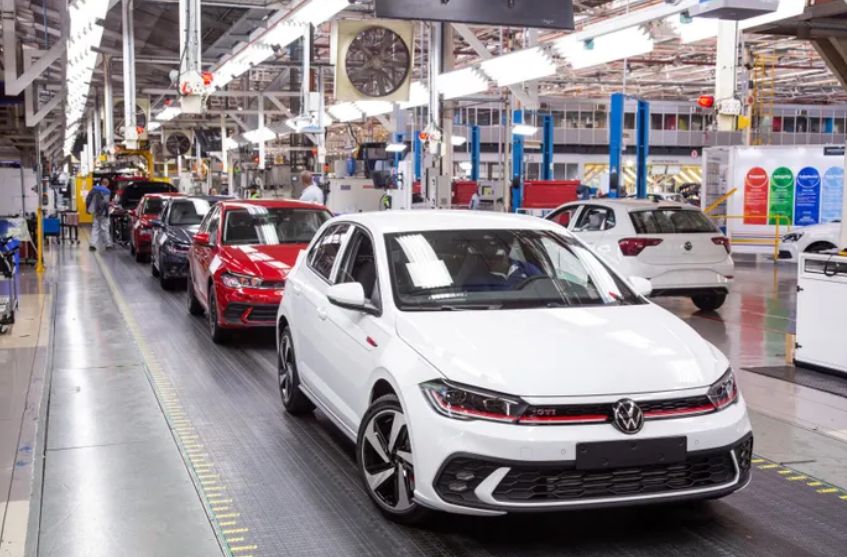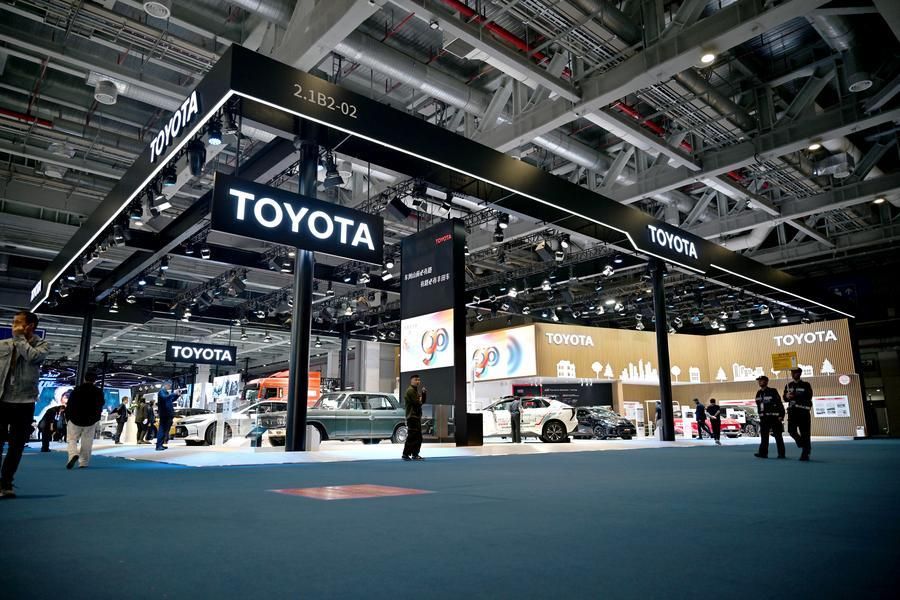

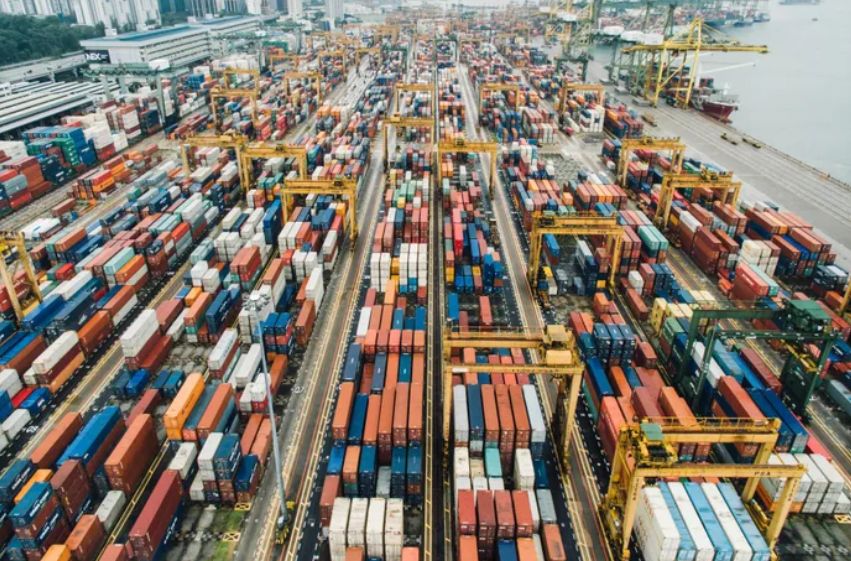
That gap, between what Africa digs up or grows and what Africa actually manufactures, was the subject at the centre of the 13th Manufacturing Indaba, held in Sandton on 14 and 15 July under the banner Made in Africa: Scaling Growth and Shaping Trade. Deputy President Paul Mashatile and a lineup of government and industry figures used the platform to restate a familiar ambition: that Africa should stop exporting raw materials and start exporting finished goods. The harder question, and the one worth sitting with, is whether that ambition is designed to reach the people who most need it to succeed.
The economics of who gets paid
The value chain behind something as ordinary as a bag of coffee illustrates the point well. A farmer grows and harvests the beans, but the beans still need to be roasted, ground, packaged, branded and sold before anyone drinks the result, and each of those steps is where money gets made. Manufacturing already contributes about 13 percent of South Africa’s economy and supports more than 1.6 million direct jobs, according to government figures, yet Statistics South Africa reported in June that the sector contracted 0.8 percent in the first quarter of 2026, its second consecutive quarterly decline. The ambition to industrialise is not new. What has changed is the urgency, as officials increasingly use the term reindustrialisation, a word that concedes, more honestly than most government language does, that South Africa has already lost a meaningful share of the manufacturing capacity it is now trying to rebuild.
Indonesia’s nickel lesson, and its limits
If African governments want a live case study of what serious value-addition policy can achieve, and where it can go wrong, Indonesia’s nickel sector is the obvious reference point. Jakarta banned the export of raw nickel ore in 2014, tightened the restriction further in 2020, and backed it with industrial parks, tax holidays and foreign investment, much of it Chinese, aimed squarely at building domestic processing capacity. The results were dramatic: Indonesia’s nickel-related exports rose from around 6 billion US dollars in 2013 to nearly 30 billion dollars by 2022, driven by exports of stainless steel and battery materials rather than raw ore. The country now accounts for well over half of global nickel production, a level of market concentration few resource-rich nations have ever achieved in a single commodity.
Africa, by contrast, holds close to a third of the world’s known mineral reserves but attracted only 2.8 percent of global foreign direct investment into critical minerals processing between 2019 and 2023, according to analysis cited by the Atlantic Council. That imbalance is precisely what Made in Africa rhetoric is trying to correct. But Indonesia’s model has not been costless or uncontested. The European Union challenged the nickel export ban at the World Trade Organization, and a dispute panel found it violated trade rules, even if the WTO’s paralysed appellate system has left the ruling without practical consequence. Closer to home, Zimbabwe’s attempt to replicate the Indonesian approach by restricting raw lithium exports ran into a much more African problem: mining companies were reluctant to build processing plants without reliable electricity, water and transport infrastructure already in place, precisely the gaps that reindustrialisation policy is meant to close but often cannot close quickly enough to satisfy an export ban’s timeline. The lesson is not that export restrictions and local-content mandates cannot work. It is that they only work when paired with the unglamorous, capital-intensive groundwork of power, logistics and finance, in that order.
The people question
This is where the Manufacturing Indaba’s rhetoric runs into the same test that has undone previous South African industrial strategies. Linda Matuwane, one of the event’s organisers, and Kaamil Alli, spokesperson for Trade, Industry and Competition Minister Parks Tau, both spoke about drawing township entrepreneurs and small manufacturers into supply chains presently dominated by large firms. That is the correct instinct. It is also the part of industrial policy that consistently gets underfunded relative to the incentives large investors receive. A small manufacturer cannot simply will its way into a multinational’s supply chain; it needs affordable finance, dependable electricity and actual contracts, none of which a conference panel can hand out. Modern factories, meanwhile, increasingly rely on automation and digital systems to stay competitive, which means the jobs created may look nothing like the assembly-line employment older industrial strategies promised. Fewer production-line roles, more demand for technicians and machine operators, a shift that only benefits ordinary workers if training pipelines are built well before the factories are.
There is also a consumer-facing myth worth puncturing directly. A locally made product does not automatically arrive cheaper than an imported one. South African factories still need to import machinery, chemicals and components, still pay for electricity and financing, and often produce at smaller scale than international competitors, which can make locally manufactured goods more expensive, at least initially. That is not necessarily evidence of policy failure. A country can reasonably decide that paying a little more for a locally made product is worth it for the jobs, skills and industrial capacity it builds over time. But that trade-off needs to be stated honestly to consumers rather than sold as an automatic discount, something South African policymakers have not always been disciplined about doing.
Decarbonisation, diversification, digitalisation, and who pays for them
South Africa’s industrial strategy currently rests on three pillars: decarbonising factory output as international markets tighten carbon rules on traded goods, diversifying away from dependence on volatile raw commodity prices, and digitalising production to remain competitive. Each is a legitimate response to a real external pressure. Each is also expensive, and the businesses most able to afford cleaner machinery and digital upgrades are the large incumbents already best positioned to benefit from Made in Africa policy, while the small manufacturers officials say they want to include often cannot absorb the upfront cost at all. A credible industrial strategy has to reckon with that tension rather than assume decarbonisation, diversification and industrial inclusion all point in the same direction by default.
The real test
None of this means the underlying instinct behind Made in Africa is wrong. A continent that keeps exporting ore and importing the finished products made from that same ore, at a substantial markup, is not building the kind of economy that reduces unemployment or insulates itself from commodity price swings. Indonesia’s example shows what is achievable when export policy, infrastructure investment and industrial planning move together over a sustained period. It also shows that the gains concentrate wherever the capital and the contracts are directed, which is exactly the question African governments have not yet answered convincingly. A slogan and a conference declaration will not train a technician, electrify an industrial park or secure a township supplier’s first order. Made in Africa becomes more than rhetoric only when the jobs, the ownership and the contracts it produces are visible to the people the policy claims to be for.
Written by:
*Dr Iqbal Survé
Past chairman of the BRICS Business Council and co-chairman of the BRICS Media Forum and the BRNN
*Sesona Mdlokovana
Associate at BRICS+ Consulting Group
Africa Specialist
**The Views expressed do not necessarily reflect the views of Independent Media or IOL.
** MORE ARTICLES ON OUR WEBSITE https://bricscg.com/ (https://bricscg.com/)
** Follow @ (https://x.com/brics_daily)brics_daily (https://x.com/brics_daily)on Twitter for daily BRICS+ updates and instagram @brics_daily (https://www.instagram.com/brics_daily?igsh=bmhvbTd0YzA4a2wx)