
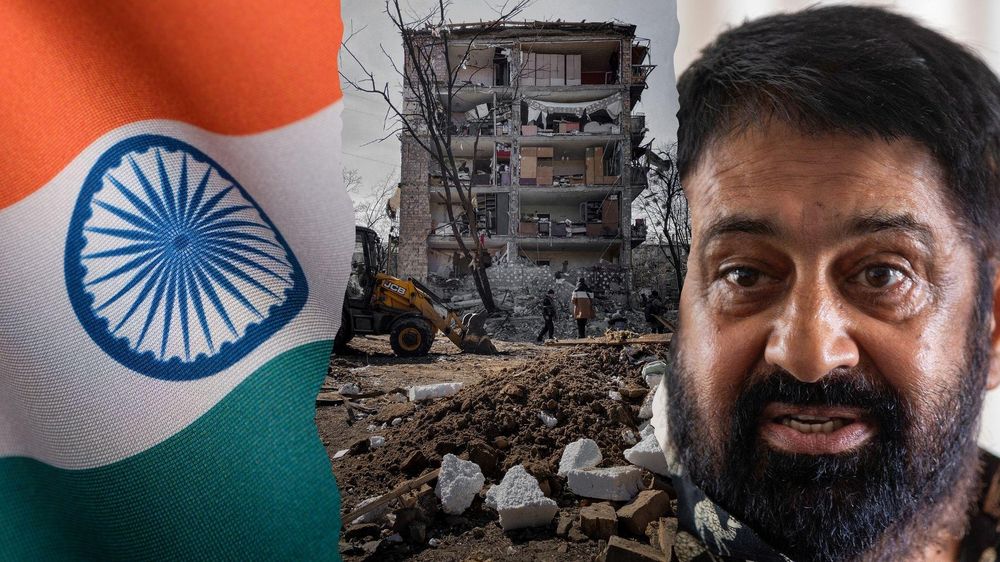
As India takes the helm of the BRICS Summit (https://iol.co.za/news/world/2025-11-17-brics-represents-a-new-era-for-the-global-south/) this year, the stakes have never been higher. In an exclusive interview, South Africa’s High Commissioner to India, Professor Anil Sooklal, shares his insights on the multifaceted challenges facing the bloc, from geopolitical tensions to the pressing need for sustainable development. With an ambitious agenda ahead, how will India navigate these turbulent waters?
Sooklal said India has taken over the chairship at perhaps the most difficult time in recent history.
“With all the challenges we are facing, especially now, since last year, with the new US administration, where we first had the weaponisation of tariffs that has impacted all of us. The withdrawal from multilateral bodies by the USA, the weakening of the multilateral system, and, of course, the ongoing conflicts, be it the Russia-Ukraine situation, or what is happening in Africa, Sudan (https://iol.co.za/news/brics/2026-04-02-brics-series-sudans-bodies-are-the-battlefield-on-sexual-violence-as-strategy/) and other places. And more recently, the Iran-Israel-USA conflict,” Sooklal explained.
“BRICS has to deal with all of these and continue to be coherent and fulfil the very vast agenda of the BRICS cooperation.”
He said India chose an innovative theme, drawing from the BRICS acronym: building for resilience, innovation, cooperation and sustainability. These are a continuation of BRICS’ previous BRICS chairships, where they have spoken of innovation, new technologies, and cooperation, which is even more critical today than in the past, and sustainability is also critical.
Sooklal said India’s ambitious programme includes about 200 meetings, with a third held online. The remaining are physical meetings, including around 16 ministerials. Initial Sherpa meetings and various expert group meetings are already underway.
“One of the challenges that we face is that we have been trying to have a common BRICS statement around the situation in West Asia, but it’s difficult. We are now a group of 10 countries and an equal number of partner countries. So coordination becomes more protracted to find a common position. BRICS is a consensus-building entity,” Sooklal explained.
“What all of this has shown, the conflict, especially in the Middle East, is the need for a platform like BRICS because the Global South now has to be at the forefront of shaping the new global order. A new global order is already taking shape. What is happening in Iran (https://iol.co.za/news/brics/2026-04-02-brics-series-indias-return-to-iranian-oil-after-seven-years/), what has happened in Venezuela, is awakening for us, developing countries, that we need to protect our sovereignty. We need to work as a collective. We need to protect the multilateral global architecture because if the UN system fails and collapses, what do we have? It’s a free-for-all.”
Sooklal highlighted that some countries are determined to dismantle the rules-based global architecture underpinned by international law.
“BRICS has always maintained that the only way we can move forward to creating a more inclusive, equitable, just global architecture is by protecting multilateralism, protecting international law and working in collaboration with each other. These are challenges which will be addressed,” Sooklal said.
He noted that the established tracks, for instance, the agricultural ministerial track, the working groups, science and technology, and innovation, the health track, the national security advisors, the foreign ministers, and all of the established tracks that work will go on.
“We’ve not allowed the challenges around Russia-Ukraine, which involved a BRICS member, to distract us even during our chairship of 2023. This situation was there, but we had a very successful chairship, and so did Russia and Brazil over these past two years,” Sooklal said.
“I expect yes, there will be many, many challenges that will impact the BRICS calendar. But I believe that the goals we have set for the Indian chairship will be met and fulfilled because these are goals that benefit not just the BRICS countries, our partners, but the global community, especially the Global South (https://iol.co.za/news/brics/2026-04-02-brics-series-the-war-that-cannot-decide-what-it-is/).
“We cannot allow the current situation to detract us from the goals we have set because the goals we have set are precisely of the kind of challenges that are being thrown up out of these conflicts.”
thobeka.ngema@inl.co.za