
A statement that demands an answer
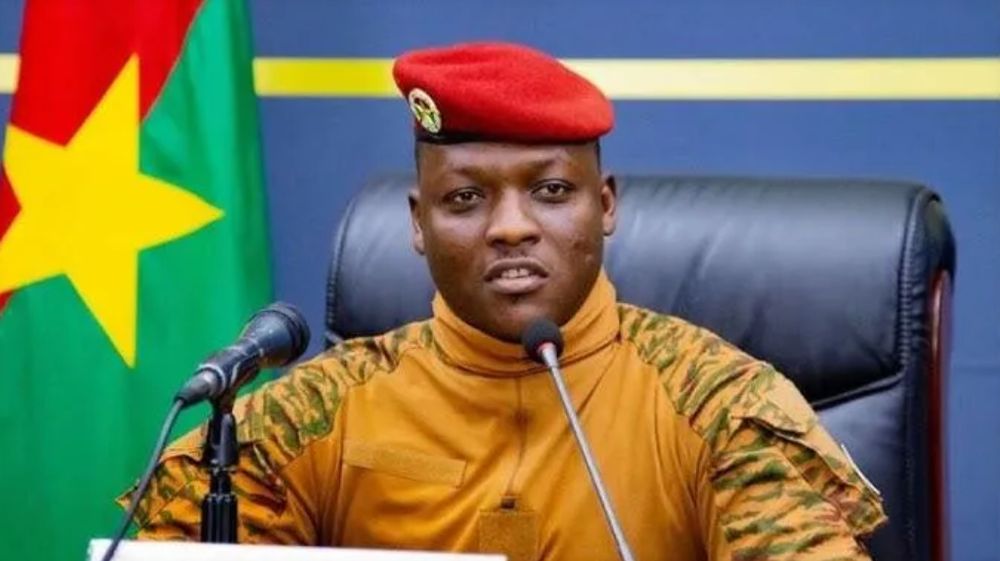
On April 3, Ibrahim Traoré stood before state television cameras and told the people of Burkina Faso and by extension, a watching continent, that democracy "kills," that it is "not for us," and that it must simply be forgotten. The statement reverberated across African media, split opinion cleanly down ideological lines, and was absorbed into the ongoing, unresolved debate about what governance in post-colonial Africa should actually look like.
It deserves a serious answer. Not a dismissal, and not an ovation.
The critique that has merit and its limits
There is a legitimate intellectual tradition from which Traoré’s words draw, even if imperfectly. Africa’s most rigorous thinkers from Fanon to Mbembe, from Nkrumah to Ngugi have long argued that Western liberal democracy, transplanted without economic sovereignty or genuine institutional depth, produces hollow governance: elections without accountability, parliaments without power, constitutions without citizens. The Sahel’s repeated democratic collapses did not emerge from nowhere. They emerged from states that were structurally underfunded, externally managed, and stripped of the administrative capacity needed to deliver basic security and services to their populations.
When Traoré states that "democracy is not for us," he is directing his critique at a specific model, Western liberal democracy historically exported to Africa through intervention, coercion, and conditional aid.Read carefully, this is a coherent critique. The problem is not that the critique exists. The problem is what the regime has built or failed to build, in democracy’s place.
The record the rhetoric cannot erase
Governance must ultimately be judged by outcomes for the governed. On that measure, the transitional government’s record is not a work in progress. It is a documented deterioration.
Fatalities linked to militant Islamist violence have almost tripled since the coup, reaching 17,775 deaths ,compared to 6,630 in the equivalent period before Traoré came to power. Burkina Faso is now the country most affected by terrorism in the entire world, accounting for one quarter of all extremist attacks globally. Military forces are estimated to operate freely in as little as 30 percent of the country’s territory. Between three and five million people have been displaced, with Burkinabè refugees now fleeing into Côte d’Ivoire, Ghana, and Senegal.
These are not the statistics of a state being rebuilt. They are the statistics of a state contracting. The security crisis that democratic governance was blamed for failing to contain has, measurably, worsened under military rule. This is not a Western framing. It is arithmetic.
The institutional demolition nobody is discussing
Beyond the security failures, what the Ouagadougou regime has systematically dismantled is the very infrastructure through which citizens hold power accountable. More than 100 political parties have been scrapped and their assets seized. The Independent National Electoral Commission was dissolved. Parliament and all political activity have been suspended. Journalists, political opposition leaders, and prosecutors critical of the government have been forcibly conscripted and sent to the front lines.
Sahel scholar Leonardo Villalón of the University of Florida notes that speaking the language of democracy "used to be necessary for military regimes to justify themselves," but observes that this regime now feels secure enough to abandon even that pretense, in part because it has acquired sufficient international cover to do so.
That international cover, ECOWAS weakened by the formation of the Alliance of Sahel States, the African Union constrained by its own non-interference architecture, and a section of pan-African opinion captured by the regime’s social media machinery, is itself a governance crisis. When regional bodies cannot enforce democratic norms and continental solidarity is weaponised to shield impunity, every African citizen is made more vulnerable.
What Africa actually needs
The real question Traoré’s statement forces onto the table is not whether Western liberal democracy is sufficient for Africa, it is not, and that debate is long overdue. The real question is whether security, sovereignty, and development can be achieved without any form of popular accountability whatsoever. History offers no example where they have been.
Africa does not need to import democracy uncritically. It needs to build institutions — rooted in African political philosophy, in ubuntu, in the deliberative traditions of the continent’s own governance histories, that make power answerable to the people it claims to serve. That project requires more political openness, not less. More press freedom, not conscripted journalists. More civic participation, not dissolved parties.
"Democracy kills," said the regime with the gun, the Russian advisors, and the falling territorial control. The people of Burkina Faso, three to five million of them now scattered across borders, deserve a more honest accounting of what and who has been doing the killing.
Written by:
*Sesona Mdlokovana
Associate at BRICS+ Consulting Group
Africa Specialist
**The Views expressed do not necessarily reflect the views of Independent Media or IOL.
** MORE ARTICLES ON OUR WEBSITE https://bricscg.com/ (https://bricscg.com/)
** Follow @ (https://x.com/brics_daily)brics_daily (https://x.com/brics_daily)on Twitter for daily BRICS+ updates and instagram @brics_daily (https://www.instagram.com/brics_daily?igsh=bmhvbTd0YzA4a2wx)