
A region connected by history, but still divided by borders
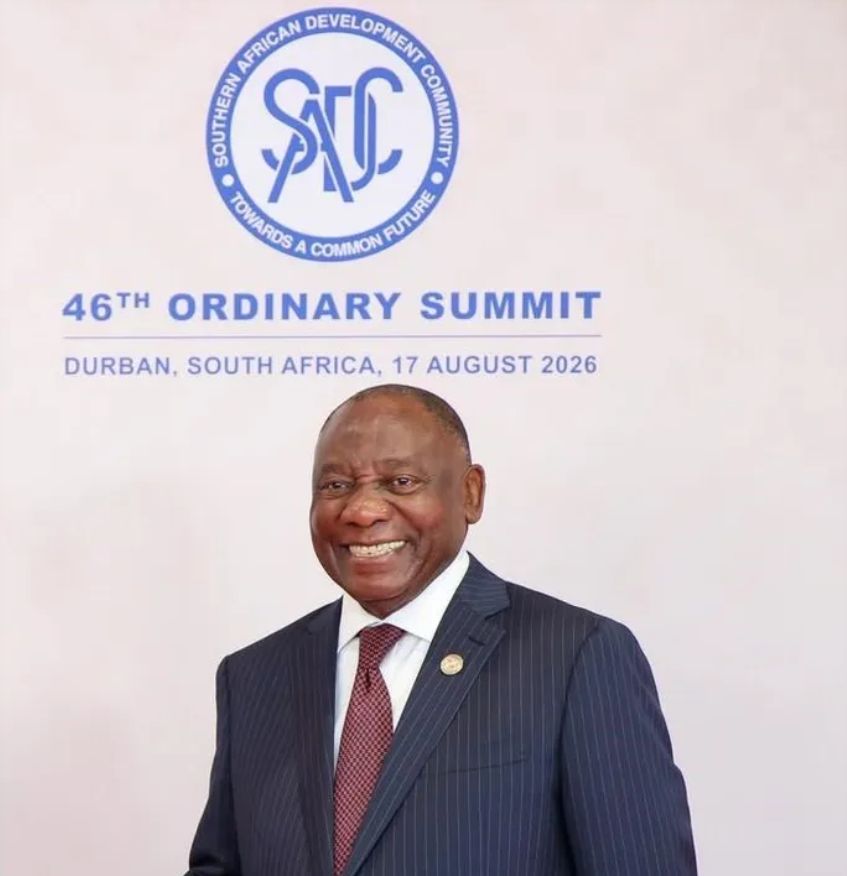
The symbolism of the summit is important.
SADC was born out of the political struggle against apartheid and colonial rule. Its founding states understood that the liberation of one country could not be separated from the freedom and stability of its neighbours. That history remains part of the organisation’s identity.
But the challenges facing Southern Africa today are less about political liberation and increasingly about economic liberation.
A truck travelling from Zambia to South Africa can encounter multiple border crossings, administrative procedures and infrastructure bottlenecks before its goods reach their destination. Electricity shortages in one country can affect businesses across another. Drought does not stop at a national boundary. Neither do security threats, migration or economic shocks.
The region is therefore interconnected whether its systems are integrated or not.
That distinction matters.
From borders to economic corridors
One of the strongest messages emerging from the summit is the need to treat infrastructure as the backbone of regional integration.
SADC leaders have placed trade, infrastructure, energy and regional integration high on the agenda, with particular attention to improving border infrastructure and strengthening regional electricity cooperation.
This could have enormous economic consequences.
Southern Africa has some of the continent’s richest mineral deposits, major agricultural potential and significant energy resources. Yet these advantages are often undermined by weak transport links, unreliable electricity and expensive cross-border trade.
A road or railway connecting a mine to a port is not merely infrastructure. It is a potential supply chain. A more integrated electricity grid is not simply an engineering project. It can determine whether a factory operates consistently. A more efficient border can mean the difference between a profitable exporter and a business that loses money waiting for goods to move.
This is where SADC’s ambitions need to become tangible.
Critical minerals could change the equation
The summit’s emphasis on critical minerals is particularly significant.
Southern Africa sits on resources that are increasingly important to the global energy transition, including lithium, cobalt, manganese, copper and platinum-group metals.
For decades, Africa’s role in the global economy has largely been to export raw materials and import finished products. Critical minerals present another opportunity to break that pattern.
Instead of simply exporting minerals, SADC countries could develop regional value chains around processing, manufacturing and eventually technologies linked to batteries, renewable energy and electric mobility.
But that requires cooperation.
It makes little economic sense for every country to attempt to build every part of a supply chain independently. One country may have the mineral deposits, another the energy capacity, another the manufacturing capability and another the port infrastructure.
Regional integration can turn those differences into strengths.
The test is implementation
This is where the summit becomes more than another diplomatic gathering.
SADC has ambitious plans, including its Vision 2050, which imagines a peaceful, inclusive, competitive and prosperous region. South Africa’s chairship is placing particular emphasis on practical economic integration and infrastructure development.
But Southern Africa does not suffer from a shortage of strategies.
It suffers from an implementation gap.
The real measure of this summit will therefore not be how powerful the speeches sound in Durban. It will be whether decisions taken by leaders eventually translate into faster borders, more reliable electricity, better roads and railways, greater agricultural production and industries that create jobs.
That is especially important for a region with a rapidly growing young population and high levels of unemployment.
A stronger SADC means a stronger Africa
SADC’s importance extends beyond Southern Africa.
A more integrated regional economy strengthens the broader African project. It supports the ambitions of the African Continental Free Trade Area by making it easier for goods, services and investment to move across borders.
It also gives African countries greater bargaining power internationally.
A collection of fragmented economies negotiating individually with major global powers has less leverage than an integrated regional market with shared infrastructure, resources and industrial capacity.
That is ultimately what makes this summit important.
The shared history that brought Southern African countries together created SADC. The shared economic challenges of the present may determine whether it fulfils its promise.
Southern Africa has the resources, people and markets to build a much more integrated regional economy. What it needs now is the political will to connect them.
The Durban summit is therefore not simply a celebration of where SADC came from.
It is a test of whether the region can finally build the future it has been talking about for decades.
Written by:
*Dr Iqbal Survé
Past chairman of the BRICS Business Council and co-chairman of the BRICS Media Forum and the BRNN
*Sesona Mdlokovana
Associate at BRICS+ Consulting Group
Africa Specialist
**The Views expressed do not necessarily reflect the views of Independent Media or IOL.
** MORE ARTICLES ON OUR WEBSITE https://bricscg.com/ (https://bricscg.com/)
** Follow @ (https://x.com/brics_daily)brics_daily (https://x.com/brics_daily)on Twitter for daily BRICS+ updates and instagram @brics_daily (https://www.instagram.com/brics_daily?igsh=bmhvbTd0YzA4a2wx)