

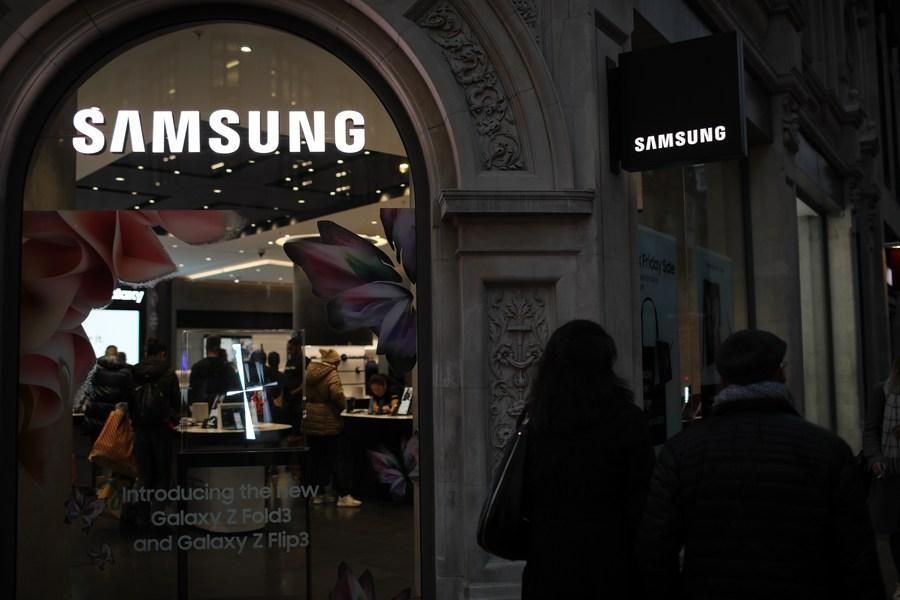
Three years ago, Samsung became the cautionary tale every corporate IT department cited when explaining why employees couldn’t use ChatGPT. In March 2023, engineers at the South Korean tech giant uploaded proprietary source code and confidential meeting notes into the public version of the chatbot. The data left Samsung’s perimeter entirely. The company’s response was swift: a blanket ban on generative AI tools across the workforce.
This week, Samsung reversed that ban in the most public way imaginable.
On June 21, 2026, Samsung confirmed it is rolling out ChatGPT Enterprise and Codex to all employees in Korea and all employees worldwide within its Device eXperience division, the unit responsible for smartphones, televisions, monitors, and home appliances. OpenAI is calling it one of its largest enterprise deployments to date. The arc from cautionary tale to flagship customer, in just three years, tells you almost everything you need to know about where enterprise AI stands right now.
The Real Story Isn’t the Reversal. It’s What Made It Possible.
Samsung didn’t simply change its mind. It changed the conditions. From April to May 2026, 2,500 employees in the DX division ran a two-month proof-of-concept, simultaneously testing ChatGPT, Gemini, and Claude. That pilot was preceded by Samsung SDS signing a reseller partnership with OpenAI in December 2025, making it the first Korean company authorised to deliver and technically support ChatGPT Enterprise for local clients. The groundwork was methodical, not reactive.
Access is now gated: employees must complete internal AI security training before they can use either tool. ChatGPT Enterprise brings data protection, user access management, and security controls that the consumer version never offered. The 2023 leak happened because consumer ChatGPT could retain user inputs. The enterprise version commits not to train OpenAI’s models on customer data. The concern that triggered the ban has been addressed at the contract level. That’s the template every large company watching this story should be studying.
Codex Is the Sharper Edge
ChatGPT gets the headline. Codex is the more interesting bet. A coding agent can touch source code, tests, internal tooling, deployment scripts, the connective tissue of software operations. That makes Codex a bigger governance challenge and a bigger productivity prize. Samsung isn’t deploying it only to engineers. Marketing teams, manufacturing staff, and product developers are in scope. An employee with zero coding background can theoretically describe what they want and get working software back.
Codex weekly active users in Korea have grown nearly 800% since February 2026, and more than five million people now use it weekly globally. Those numbers suggest Samsung is riding a wave that was already building, not creating one from scratch. But deploying it to a workforce of this scale, spanning R&D, manufacturing, and marketing, is a different order of magnitude from any prior rollout.
NVIDIA ran a comparable exercise earlier in 2026, deploying Codex to more than 10,000 employees. Samsung’s deployment is larger in declared scope. The gap matters. When the world’s largest consumer electronics manufacturer treats an AI coding tool as a company-wide productivity platform rather than a developer perk, the IT request queue and the assumptions built around it, starts to look fragile.
What the Rest of the Market Should Take From This
For OpenAI, the Samsung win validates its enterprise strategy at a moment when competition from Anthropic, Google’s Gemini, and Microsoft’s Azure AI services is intensifying. Landing a customer at Samsung’s scale provides leverage in every enterprise negotiation that follows.
For everyone else, the message is harder to ignore. Banning AI tools outright aged badly. The shift from a company-wide ban to one of OpenAI’s largest enterprise rollouts represents one of the most dramatic AI adoption reversals in corporate history. It also validates the argument that the question was never really whether employees would use these tools. It was always about whether companies would manage that use properly or leave it unmanaged. Samsung spent three years building the answer. Most companies don’t have that long.
Written by:
*Chloe Maluleke
Associate at BRICS+ Consulting Group
Russia & Middle East Specialist
**The Views expressed do not necessarily reflect the views of Independent Media or IOL.
** MORE ARTICLES ON OUR WEBSITE https://bricscg.com/ (https://bricscg.com/)
** Follow @ (https://x.com/brics_daily)brics_daily (https://x.com/brics_daily)on Twitter for daily BRICS+ updates and instagram @brics_daily (https://www.instagram.com/brics_daily?igsh=bmhvbTd0YzA4a2wx)