

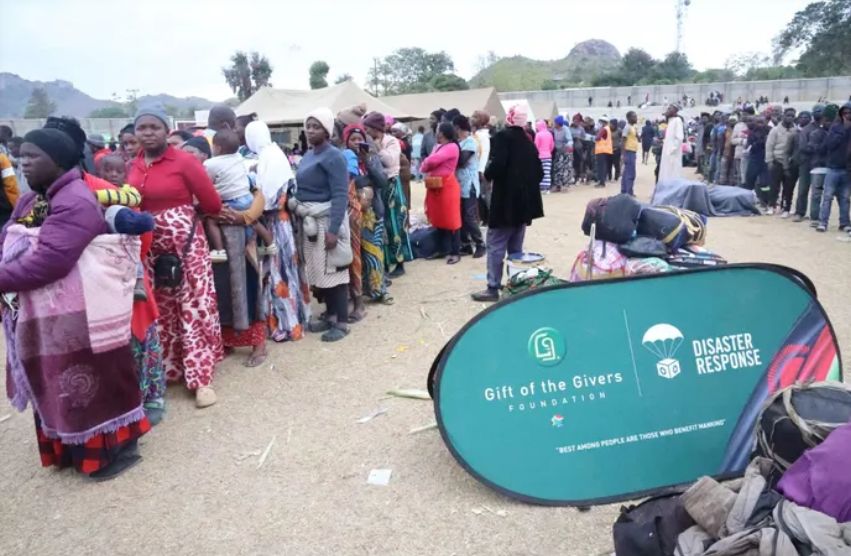
A crisis, not a prejudice
There is a meaningful distinction between opposing illegal immigration and opposing Africans. President Cyril Ramaphosa’s address to the nation drew that line explicitly, insisting South Africans are not, by disposition, xenophobic, while acknowledging that undocumented migration places real pressure on the labour market and public services. His five-pillar strategy, tighter enforcement, dedicated immigration courts, border security, anti-corruption measures within Home Affairs, and continental cooperation, is not the architecture of a nation rejecting its neighbours. It is a state trying, belatedly, to govern its own borders, a right every sovereign nation claims without apology.
None of this excuses what has happened on the ground. Vigilante violence has no legitimate place in immigration policy, and no economic grievance justifies mob action against another human being. That must be said plainly. However, criminal violence carried out by opportunists exploiting public frustration does not retroactively delegitimise a legitimate concern about an unmanaged migration system. Two wrongs can co-exist. Ramaphosa has been unambiguous that only the state holds authority to enforce immigration law , not private citizens, not vigilante groups. Condemning the violence and acknowledging the crisis are not contradictory. They are, in fact, the only intellectually honest positions available.
Selective outrage
What is striking is how selectively the "xenophobia" label gets applied. When Nigeria expelled roughly two million undocumented West African migrants in 1983, the episode remembered as "Ghana Must Go", it was rarely framed in the global press as a referendum on Nigerian character. When Ghana itself moved against foreign traders under its Aliens Compliance Order decades earlier, the same restraint applied. Saudi Arabia has carried out mass deportations of undocumented Ethiopian workers for years with comparatively muted global commentary. Italy’s arrangement to process migrants offshore in Albania, and the United States’ large-scale deportation operations, are debated as policy, not indicted as national bigotry. South Africa enforcing its own immigration law is treated as a moral crisis. Other states doing the same is treated as governance. That inconsistency should trouble anyone claiming to analyse this honestly.
The continent’s selective silence
More troubling still is the continent’s own quiet. Ethiopia’s Tigray conflict killed hundreds of thousands and displaced millions. Sudan’s civil war has produced the world’s largest displacement crisis, with famine conditions confirmed in parts of the country. The M23 conflict in eastern DRC has driven repeated waves of mass killing and displacement in 2026 alone. Nigeria continues to battle Boko Haram, banditry and mass abductions that regularly claim dozens of lives at a time. None of these crises resulted in the African Union suspending engagement with the governments involved, nor in continental leaders being shut out of summits or bilateral tables. Yet South Africa, moving to formalise and legalise its immigration enforcement while explicitly condemning vigilante violence, risks becoming the continent’s designated villain of the year. That asymmetry is not accidental, it is a failure of continental accountability that deserves as much scrutiny as South
Africa’s borders do.
Diplomacy cannot be held hostage
What must not happen is the collapse of African diplomatic and economic cooperation over this. South Africa has already dispatched special envoys across the continent specifically to explain its measures and engage regional partners, because, as Ramaphosa put it, the country’s future is inseparable from the continent’s future. BRICS engagement, African Continental Free Trade Area implementation, regional security cooperation and bilateral development ties cannot be sacrificed to a narrative that refuses to hold two truths at once: that South Africa has a real, structural migration crisis, and that its neighbours are not its enemies. Reducing this to a morality tale does a disservice to everyone, the undocumented migrant seeking dignity, the South African citizen competing for a shrinking pool of jobs, and a continent that badly needs its largest economies talking to each other, not past each other.
Written by:
*Sesona Mdlokovana
Associate at BRICS+ Consulting Group
Africa Specialist
**The Views expressed do not necessarily reflect the views of Independent Media or IOL.
** MORE ARTICLES ON OUR WEBSITE https://bricscg.com/ (https://bricscg.com/)
** Follow @ (https://x.com/brics_daily)brics_daily (https://x.com/brics_daily)on Twitter for daily BRICS+ updates and instagram @brics_daily (https://www.instagram.com/brics_daily?igsh=bmhvbTd0YzA4a2wx)