
Ataraxis’s inaugural 2026 Global Outsourcing AI Readiness Index places South Africa eighth out of the world’s top 25 outsourcing destinations and first in Africa, with an overall AI readiness score of 66.5 out of 100. It is not a marginal lead. South Africa sits 17.35 points clear of Egypt, the continent’s second-ranked country, and roughly 24 points above the African average , a gap wide enough to suggest South Africa isn’t competing with the rest of the continent so much as operating in a different category altogether.
The Numbers Behind the Headline
The index measures four dimensions: population AI adoption, workforce AI literacy, enterprise AI adoption, and the strength of a country’s AI education pipeline. South Africa is one of only a handful of destinations globally to clear the 50-point midpoint on all four scori ng 78 on population adoption, 65 on enterprise adoption, 63 on workforce literacy, and 53 on education pipeline, its weakest link. The enterprise figure is the most striking. South Africa’s score of 65 is 23 points ahead of Egypt’s 42, and it stands as the only African country to break 50 on enterprise AI adoption at all. Morocco (39), Kenya (35), Nigeria (34), Ghana (31), Uganda (14) and Ethiopia (14) all trail well behind, meaning that outside South Africa, corporate AI deployment across the continent remains largely at the pilot stage rather than embedded in daily business operations.
Placed alongside its global peers, South Africa now ranks between Czechia (7th, 66.9) and Bulgaria (9th, 62.8) , ahead of established, EU-adjacent outsourcing markets that have spent two decades building nearshore reputations with Western Europe. That is a genuinely unusual position for an African economy to occupy, and it complements a separate result: South Africa also placed fifth globally in Ataraxis’s 2026 Global Outsourcing Talent Index, which assesses overall outsourcing competitiveness across 193 UN-recognised countries.
Why This Matters More Than a Ranking
Rankings are only useful if they change buyer behaviour, and in outsourcing, AI readiness increasingly does. Global business-process clients no longer just want cheaper labour; they want partners who can run AI-augmented workflows , chatbots layered with human escalation, AI-assisted claims processing, generative-AI content and coding support without lengthy retraining. Traditional outsourcing giants like the Philippines and India built their dominance on voice and back-office volume; the next competitive battle is over which destinations can credibly blend human talent with AI tooling at enterprise scale. On that measure, South Africa’s enterprise adoption lead functions less like a badge and more like a moat: rival African hubs would need years, not months, to close a 23-point enterprise gap, and outsourcing contracts of scale generally run three to five years, meaning the current window is likely to shape where new AI-enabled work lands well into the next decade.
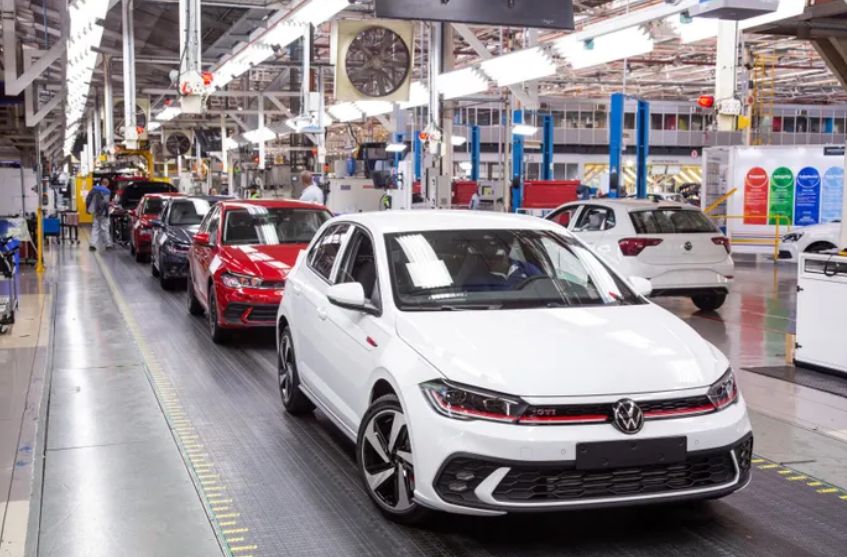
There is a useful comparison here to South Africa’s automotive sector, where decades of policy support built export capacity that newer entrants now struggle to replicate quickly. Business services may be following a similar logic early, sustained investment in enterprise digital capability compounding into a durable advantage that is hard for competitors to buy their way into overnight.
The Weak Link Is the Pipeline, Not the Present
The report’s own caution is worth taking seriously: the AI education pipeline, at 53, is South Africa’s lowest score of the four, and Ataraxis flagged it as the metric that will determine whether the country’s lead is sustained or eroded over the next decade. A country can lead on enterprise adoption today while under-investing in the university and technical-college pathways that produce tomorrow’s AI-literate workforce and Egypt, Kenya and Nigeria, all of which made the global top 20, are not standing still. Kenya in particular has built a reputation for tech-sector dynamism that could translate into faster education-pipeline gains than South Africa’s more entrenched institutions manage.
For now, though, the data supports a straightforward conclusion: South Africa has moved from being merely Africa’s most established outsourcing destination to being its only credible AI-outsourcing hub, and one of a small number worldwide clearing the bar on every dimension that matters. Whether that becomes a launchpad for the next phase of the country’s services economy, or a lead it fails to defend, depends less on where it stands in 2026 than on what it does with its universities and technical training system between now and 2030.
Written by:
*Dr Iqbal Survé
Past chairman of the BRICS Business Council and co-chairman of the BRICS Media Forum and the BRNN
*Sesona Mdlokovana
Associate at BRICS+ Consulting Group
Africa Specialist
**The Views expressed do not necessarily reflect the views of Independent Media or IOL.
** MORE ARTICLES ON OUR WEBSITE https://bricscg.com/ (https://bricscg.com/)
** Follow @ (https://x.com/brics_daily)brics_daily (https://x.com/brics_daily)on Twitter for daily BRICS+ updates and instagram @brics_daily (https://www.instagram.com/brics_daily?igsh=bmhvbTd0YzA4a2wx)