

A Sector in Slow Retreat
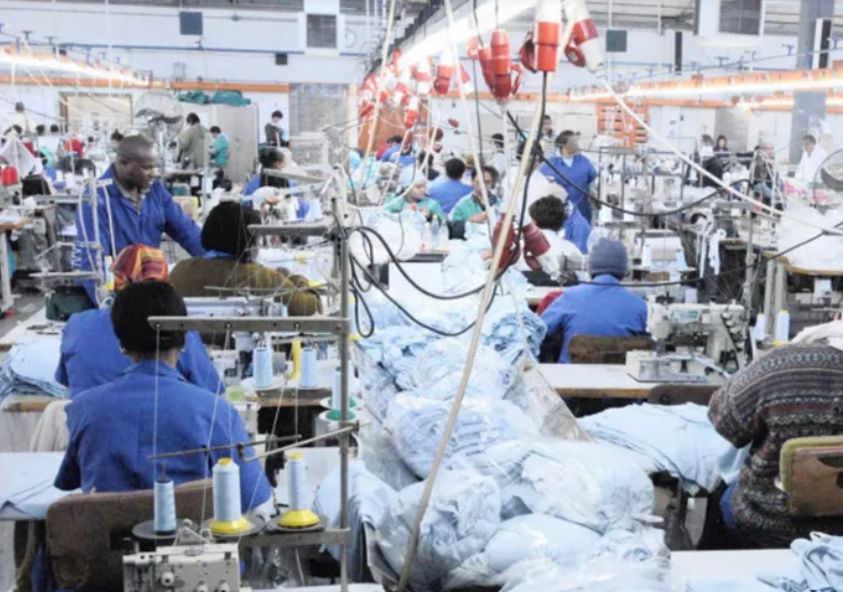
This was not a one-quarter stumble. Manufacturing has now lost 35,000 jobs over the past year, a 2.7 percent annual decline, with cuts spread across food and beverages, textiles, chemicals, metals and transport equipment, according to Stats SA. Business services lost 13,000 positions, trade shed 8,000 and transport dropped 5,000. Only community services, which added 29,000 jobs, kept the overall number from looking far worse, alongside marginal gains of 1,000 each in electricity, mining and construction.
The pattern inside manufacturing itself is telling. Full-time positions fell by 10,000, but part-time manufacturing jobs collapsed by 12.2 percent, a loss of 10,000 roles from a much smaller base. That is not simply fewer jobs. It is a sector shedding the more stable, full-time work first and then cutting into what part-time capacity remains, a sequence that usually signals firms are not just trimming costs but scaling back production capacity altogether.
The Bigger Picture Is Worse Than One Quarter Suggests
Q2’s loss follows an upwardly revised 109,000 job loss in the first quarter, bringing the total formal-sector loss for the first half of 2026 to 123,000, according to Xinhua’s analysis of the Stats SA data. Year on year, the formal sector has shrunk by 95,000 positions. This coincided with South Africa’s GDP contracting 0.2 percent in the same quarter and the official unemployment rate climbing to 33.6 percent, up from 32.7 percent in Q1, with youth unemployment at a staggering 47.4 percent and five million young people out of work entirely.
There is also a quality dimension easy to miss in the headline figure. Full-time employment across the whole formal sector fell by 40,000 jobs while part-time employment rose by 26,000. Average monthly earnings did grow 4.1 percent year on year to R30,611, but total gross earnings paid to employees fell by R4.8 billion for the quarter. Workers are being pushed toward less secure, lower-hours work even as the few who keep full employment see modest pay growth. That is a labour market quietly restructuring itself in a way the unemployment rate alone does not capture.
A Familiar Story With a Modern Trigger
South Africa’s manufacturing sector has been shrinking as a share of the economy since well before 2026, down from close to a quarter of GDP in the 1980s to roughly 12 percent today, as cheaper imports and electricity constraints eroded the sector’s competitiveness over three decades. What makes this episode notable is the cause Stats SA pointed to this time: higher input costs tied to global energy price fluctuations, rather than the load shedding that dominated the narrative for most of the past decade. It is a useful reminder that South African manufacturing has not escaped its energy vulnerability, it has simply swapped one energy problem for another. Nigeria’s manufacturers faced a near-identical squeeze through 2025 as fuel subsidy removal pushed up production costs, with similar results, workers moved into informal or part-time arrangements rather than being reabsorbed into full employment.
The structural question this raises is not whether the economy will add jobs back next quarter. It is whether a manufacturing base that keeps losing full-time positions even during periods without load shedding has a genuine growth path left, or whether it is now contracting for reasons that infrastructure fixes alone will not solve.
Written by:
*Dr Iqbal Survé
Past chairman of the BRICS Business Council and co-chairman of the BRICS Media Forum and the BRNN
*Sesona Mdlokovana
Associate at BRICS+ Consulting Group
Africa Specialist
**The Views expressed do not necessarily reflect the views of Independent Media or IOL.
** MORE ARTICLES ON OUR WEBSITE https://bricscg.com/ (https://bricscg.com/)
** Follow @ (https://x.com/brics_daily)brics_daily (https://x.com/brics_daily)on Twitter for daily BRICS+ updates and instagram @brics_daily (https://www.instagram.com/brics_daily?igsh=bmhvbTd0YzA4a2wx)







