
This has been one of those weeks that historians will circle back to. Two stories, on opposite sides of the same crumbling architecture, tell us something important about the world we are being asked to navigate: the rules-based international order that Western capitals have preached for eighty years is being rewritten in real time, by the very powers that built it.
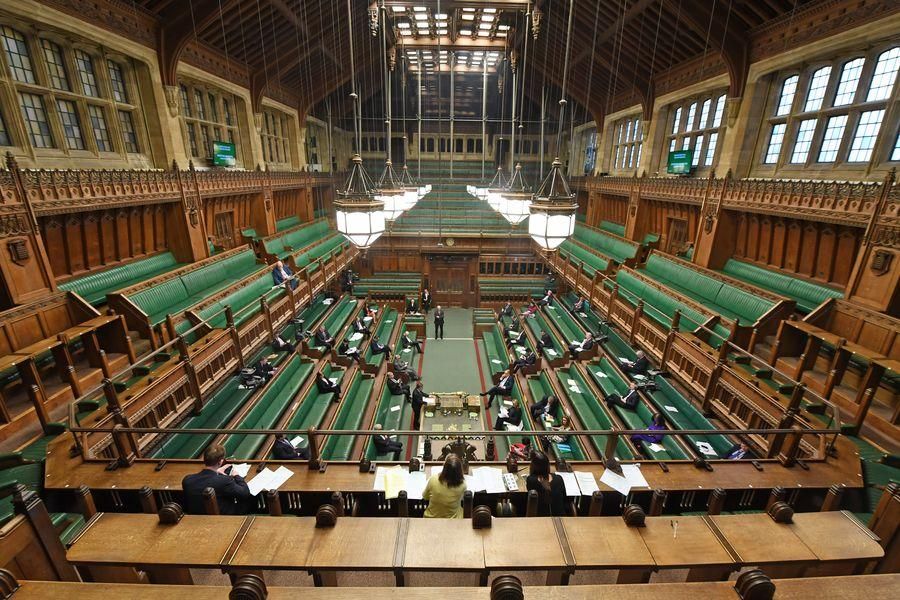
The first story broke in the House of Commons. Britain’s Foreign Secretary, Ed Miliband, stood up this week and did something no serving UK minister has done before: he accused Israeli settlers of "ethnic cleansing" against Palestinians in the occupied West Bank, declared the settlements illegal, and announced a full import ban on goods produced in them, alongside sanctions on the individuals and companies who finance, build and sell them. France and Canada followed within hours. Nine more European states, Denmark, Finland, Iceland, Ireland, Norway, Poland, Portugal, Spain and Sweden, all signed on to a joint statement pledging further restrictions. Twelve countries, several of them founding members of the transatlantic order, moving in lockstep against a close ally.
Israel’s response was swift and telling. Foreign Minister Gideon Sa’ar called the sanctions "morally corrupt" and "outrageous lies." Jerusalem ordered Britain’s consulate closed within thirty days. Washington, notably, sat this one out, with Secretary of State Marco Rubio saying the US would not join, citing fears of "destabilising" the territory, a curious phrase to use about land under military occupation for nearly six decades.
For South Africans, none of this should feel abstract. Our government took Israel to the International Court of Justice in the genocide case that reshaped how much of the Global South talks about accountability. We have spent two years being lectured, by the same powers now imposing these sanctions, about the dangers of "megaphone diplomacy" and the virtues of quiet engagement. It turns out quiet engagement has a shelf life. What changed wasn’t the law, the illegality of the settlements has been settled since 1967, what changed was that enough governments finally judged the political cost of silence higher than the cost of acting. That is worth remembering the next time Pretoria is accused of being reckless for saying plainly what international law already says.
The second story is less symbolic and more immediately felt in the pockets of South Africans. The war between the United States and Iran, now in its seventh month, escalated sharply this week. US forces sank five Iranian oil tankers in the Gulf of Oman and near Kharg Island, accusing them of funding the Revolutionary Guard’s regional network. Iran retaliated by firing ballistic missiles at a US base in Jordan, intercepted, mostly, by Jordanian air defences and by striking vessels it says are linked to Washington. The Strait of Hormuz, through which roughly a fifth of the world’s oil once flowed, remains effectively closed. Brent crude pushed past $100 a barrel this week for the first time since the war began.
That number will land in Cape Town the way it always does: at the pump, in the price of a loaf of bread trucked from Gauteng, in the rand’s exchange rate against a jittery dollar. South Africa imports the overwhelming majority of its crude. We have no say in whether Washington sinks another tanker or whether Tehran answers with missiles, yet we absorb the consequences as surely as any combatant nation does. This is the unglamorous, unromantic truth about being a middle power in a fracturing order: the wars of the powerful get fought thousands of kilometres away and paid for at petrol stations here.
What connects these two stories is not geography but a deeper shift. For decades, the assumption underpinning Western foreign policy was that some behaviour, settlement expansion, open-ended military escalation, could proceed more or less without diplomatic cost, because the alliances underwriting it were unshakeable. This week suggests that assumption is fraying. Britain, hardly a radical actor, broke with seventy years of practice. A war that was supposed to be swift is instead grinding through its second half-year with no resolution in sight, and its costs are being globalised whether anyone intended that or not.
None of this hands the Global South a victory. Sanctions on settlement goods will take six to nine months to bite, by Britain’s own admission, and Washington’s abstention shows how far unity actually extends. The oil war offers no side anyone should want to cheer for. But there is a lesson here for a country like ours, still finding its voice on the world stage: moral clarity, sustained long enough, does eventually move even the most reluctant capitals. It took South Africa’s ICJ case, and pressure from smaller states with less to lose, to help shift a conversation that London and Paris spent years avoiding. That is not nothing. In a world where middle powers absorb the costs of decisions made in Washington and Tehran, having a voice, and using it consistently, may be the only leverage left.
Written by:
*Chloe Maluleke
Associate at BRICS+ Consulting Group
Russia & Middle East Specialist
**The Views expressed do not necessarily reflect the views of Independent Media or IOL.
** MORE ARTICLES ON OUR WEBSITE https://bricscg.com/ (https://bricscg.com/)
** Follow @ (https://x.com/brics_daily)brics_daily (https://x.com/brics_daily)on Twitter for daily BRICS+ updates and instagram @brics_daily (https://www.instagram.com/brics_daily?igsh=bmhvbTd0YzA4a2wx)