
There is a particular kind of chaos that only the most powerful institutions can produce. This is the kind where everything is happening at once, nothing makes sense, and everyone involved insists it is all under control. That is America in 2026.
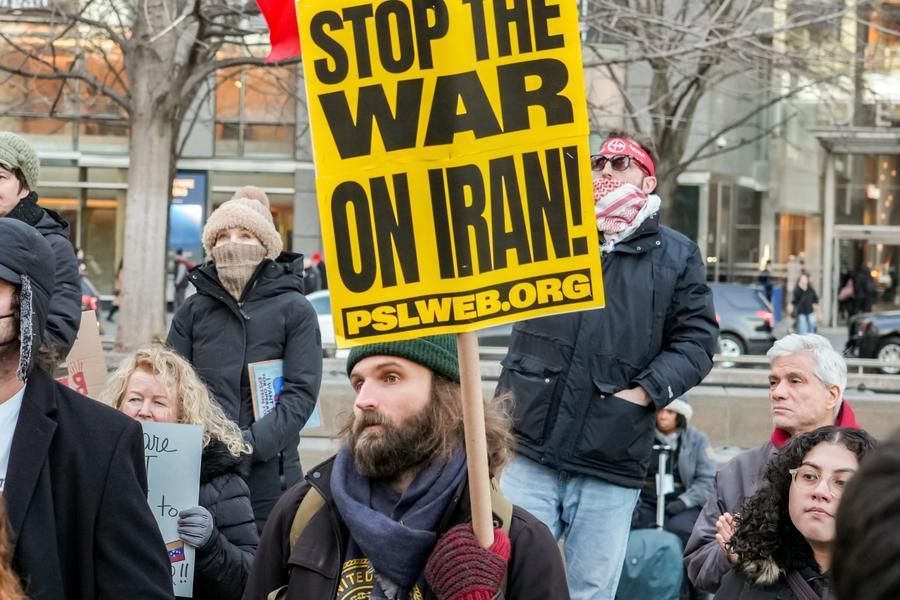
Right now, the United States is simultaneously waging a war and negotiating peace with the same country. It is blockading Iran’s ports while brokering a deal to reopen them. It struck Iranian missile sites on Monday, what the military called "self-defence strikes", while a ceasefire is technically in place. On Wednesday, Trump sat in a Cabinet meeting and promised a great deal, warned Iran not to wait him out, and declared that the Strait of Hormuz would be "open to everybody" with the US watching over it. The following day, American forces struck again. This is not what decisive looks like. This is what improvisation looks like when it has aircraft carriers behind it.
The Iran war has revealed something important. Not about America’s military, (which remains without peer) but about the distance between American power and American strategy. The two are not the same thing. Power is the ability to act. Strategy is knowing what you are acting toward. The strikes on Iran’s nuclear sites last year damaged real infrastructure. The assassination of Khamenei in February reshaped the Middle East permanently. Those were consequential acts. What has followed (the blockade, the ceasefire, the resumed strikes, the leaked deal, the White House denying the leaked deal), reads less like a strategy and more like a negotiation conducted at gunpoint with no clear endgame.
At home, things are no prettier. Trump’s approval on the economy stands at 30%. Not his overall number, his economy number, the one that was supposed to be his strongest suit. A CNN poll found that 77% of Americans, including a majority of his own Republicans, believe his policies have raised their cost of living. Petrol prices are up 33% since February. Inflation is running above 3% with no sign of coming down soon. Economists are using the word stagflation. That is the rare and miserable condition where prices keep rising while growth slows and the Federal Reserve cannot do much about either without making the other worse.
The tariffs that were meant to punish trading partners and bring factories home have functioned, in practice, as a tax on ordinary Americans. The effective tariff rate has gone from just over 2% to nearly 12% in little over a year. The last time America taxed imports at this rate, 1909 was approaching. It did not work then either.
None of this is a death sentence for Trump’s political standing. Incumbents have recovered from worse. But the midterms are in November, and independent voters, the ones who actually decide elections, are sitting at 34% approval. Every president who lost a wave midterm saw that number fall below 40% before Election Day. The math is not comfortable.
Zoom out, and the picture gets more interesting.
The most respected geopolitical risk analysts going into 2026 named the United States (not China, not Russia, not Iran) as the single biggest source of global instability. Their argument was not that America is weak. It was that an unpredictable superpower is more dangerous than a declining one. Markets need reliability. Alliances run on consistency. Diplomacy requires that the other side believes you mean what you say today and will still mean it tomorrow. On all three counts, the current administration has run up a significant deficit.
Europe is building military infrastructure independent of NATO, not because European leaders have turned against America, but because they are no longer certain America will be there when called. That is a profound shift. For seventy years, the foundational assumption of the Western alliance was American constancy. That assumption is now being quietly retired. Countries do not announce these decisions. They just stop planning around you.
China is patient. While Washington treads between war and ceasefire, Beijing is deepening trade relationships across Asia, Africa, and Latin America, positioning itself as the predictable alternative. It has its own serious problems, its own contradictions, but in the competition for global influence, patience is a strategy. And right now, China is playing a longer game than America appears to be.
None of this adds up to American collapse though. That story is too simple to be true. The US economy is still the largest in the world. Its universities still attract the best minds. Its technology companies still set the tempo for the global digital economy. The dollar remains the world’s reserve currency and will not be dethroned within any of our lifetimes. Empires do not fall like buildings. They fade slowly, unevenly, with long stretches where they still look dominant from the outside.
What is actually happening is more subtle and more important. The unspoken assumption that the American-led order was simply the way the world worked, that assumption is finished. What is replacing it is not a clean multipolar system. It is something messier: a world where American power is enormous but no longer automatically trusted.
The giant is not falling, but it is making decisions that a confident giant would not make. It is fighting a war while negotiating a peace. It is taxing its own consumers and calling it economic policy. It is claiming stewardship of international waterways as a condition of ceasefire and hoping the rest of the world finds that normal.
Some of it will work out. But the bigger question, the one that will outlast this presidency, these strikes, and these approval ratings, is whether the rest of the world rebuilds its confidence in American leadership, or quietly concludes that it needs to plan around it. Right now, they are planning around it. That, more than any single policy or crisis, is what a real shift in power actually looks like.
Written by:
*Chloe Maluleke
Associate at BRICS+ Consulting Group
Russia & Middle East Specialist
**The Views expressed do not necessarily reflect the views of Independent Media or IOL.
** MORE ARTICLES ON OUR WEBSITE https://bricscg.com/ (https://bricscg.com/)
** Follow @ (https://x.com/brics_daily)brics_daily (https://x.com/brics_daily)on Twitter for daily BRICS+ updates and instagram @brics_daily (https://www.instagram.com/brics_daily?igsh=bmhvbTd0YzA4a2wx)