

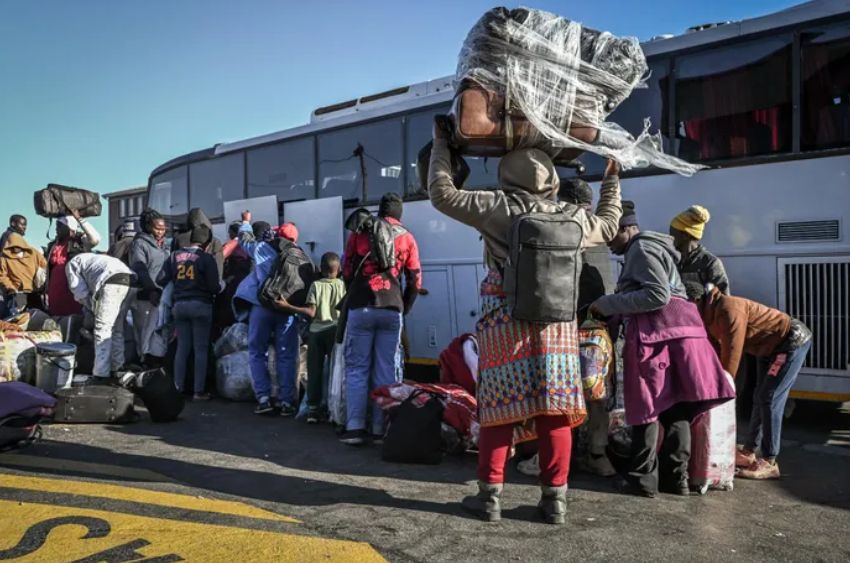
The tragedy has since triggered protests, with demonstrators blocking roads and burning tyres before clashes with police. But describing the unrest simply as a reaction to a shipwreck misses what is really happening.
The deaths have exposed a much deeper problem: people are increasingly willing to risk dying at sea because they see few alternatives on land.
When migration becomes a symptom of economic failure
Ben Guerdane is close to Tunisia’s border with Libya and has long faced economic marginalisation. Many of the people aboard the boat reportedly came from the area, including members of the same family.
For protesters, the issue was therefore not simply the failed rescue operation. It was about the conditions that made the journey seem worth attempting in the first place.
This is an important distinction.
Migration is often discussed as a border-control problem. Governments talk about stopping boats, strengthening coastguards and preventing people from reaching Europe. Those measures may reduce crossings, but they do not necessarily remove the reasons people leave.
A young person who sees unemployment, poor public services and limited opportunities at home does not suddenly stop wanting a different life because the sea has become harder to cross.
The route simply becomes more dangerous.
Europe’s migration strategy faces a difficult test
Tunisia has become a key partner in Europe’s efforts to reduce irregular migration across the Mediterranean. European funding and increased maritime surveillance have contributed to a sharp decline in departures from Tunisia over the past two years.
But fewer boats do not necessarily mean fewer people desperate to leave.
This is where Europe’s approach faces a difficult contradiction. If migration controls become more effective without addressing the economic and political conditions driving migration, people may simply take greater risks to find alternative routes.
Human rights organisations have criticised the EU-Tunisia migration arrangement, arguing that European support for Tunisian border controls has contributed to abuses against migrants and asylum seekers.
The debate therefore cannot be reduced to whether Europe should control its borders. Every country has a legitimate interest in managing migration.
The harder question is what happens when border enforcement becomes the main response to a problem that is fundamentally economic, social and political.
Tunisia is not an isolated case
The tragedy also reflects a wider African reality.
Across the continent, young people continue to move in search of employment, security and opportunity. Some migrate within Africa. Others attempt to reach Europe through the Mediterranean, despite knowing how dangerous the journey can be.
For years, the Mediterranean has effectively become a graveyard for people whose ambitions outgrew the opportunities available to them at home.
That should concern African governments as much as European policymakers.
Africa has the world’s youngest population. That demographic advantage can become an extraordinary economic asset if young people have access to education, jobs, entrepreneurship and functioning public services.
But if economic growth fails to generate opportunities, the same youthful population can become increasingly frustrated and willing to leave.
The protests are about more than migration
There is another important dimension to the unrest.
Tunisia has been experiencing broader economic and political dissatisfaction, with recent protests also focusing on unemployment, deteriorating public services and living costs.
The Ben Guerdane protests therefore sit within a larger picture of public frustration.
When people protest after a tragedy, they are often protesting the conditions surrounding it rather than the event itself.
In this case, the sinking boat became a symbol of everything that people believe has gone wrong: a lack of economic opportunity, marginalisation of certain regions and a state that they feel is not doing enough to provide a future worth staying for.
Africa needs a different migration conversation
The lesson from Tunisia is not that migration should be encouraged or that borders should be opened without controls.
It is that migration cannot be managed through enforcement alone.
Tunisia needs greater investment in disadvantaged regions, stronger employment opportunities and better public services. The wider continent needs economies capable of absorbing millions of young people entering the workforce every year.
Europe, meanwhile, needs to recognise that partnerships with African countries cannot focus almost exclusively on preventing people from reaching its shores.
There must be investment in legal migration pathways, development and job creation alongside border management.
Otherwise, the Mediterranean will remain a dangerous final destination for people who believe that the risks of leaving are smaller than the risks of staying.
The deaths off Tunisia are tragic. But the most important question is not simply how many people were on that boat.
It is why so many people felt they needed to get on it in the first place.
Until that question is taken seriously, more boats will leave, more families will wait for people who never return and more communities like Ben Guerdane will be left to mourn.
Written by:
*Dr Iqbal Survé
Past chairman of the BRICS Business Council and co-chairman of the BRICS Media Forum and the BRNN
*Sesona Mdlokovana
Associate at BRICS+ Consulting Group
Africa Specialist
**The Views expressed do not necessarily reflect the views of Independent Media or IOL.
** MORE ARTICLES ON OUR WEBSITE https://bricscg.com/ (https://bricscg.com/)
** Follow @ (https://x.com/brics_daily)brics_daily (https://x.com/brics_daily)on Twitter for daily BRICS+ updates and instagram @brics_daily (https://www.instagram.com/brics_daily?igsh=bmhvbTd0YzA4a2wx)