

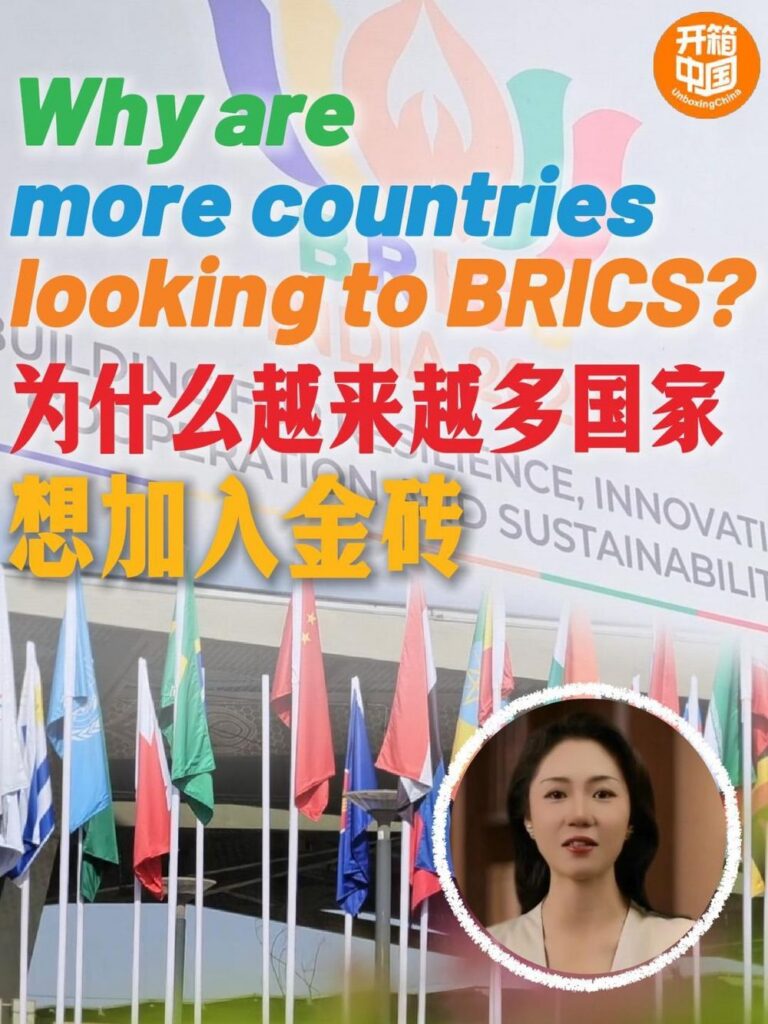
The 18th BRICS Summit has concluded in New Delhi, as BRICS marks 20 years of cooperation. From four countries to 11 members and 10 partner countries, BRICS today represents nearly half of the world’s population, around 30% of the global economy and one-fifth of global trade. Amid conflicts, trade tensions and global uncertainty, BRICS is turning its growing scale into a stronger voice — and more practical cooperation.
Watch this video (https://www.chinadaily.com.cn/a/202609/15/WS6aa8decfe4b06d4aa055e1ca.html) to see what’s drawing more countries to BRICS.
A trade bonanza for all, 20 years in the making
Deeper trade and investment ties among BRICS countries — Brazil, Russia, India, China and South Africa, as well as other member states — will help bolster economic resilience across the Global South and inject fresh momentum into an increasingly strained multilateral trading system, market watchers and business leaders said.
The potential for deeper economic collaboration is reflected in China’s growing trade with several of its BRICS partners. Exchanges with Russia, India, Brazil and South Africa all recorded double-digit growth in the first seven months of this year.
The value of trade with South Africa rose 21.7 per cent to 261.19 billion yuan (https://www.chinadaily.com.cn/a/202609/14/WS6aa74a4de4b06d4aa055dd50.html), the General Administration of Customs said.
AU diplomat calls for shared value chains
China’s zero-tariff treatment for 53 African countries (https://www.chinadaily.com.cn/a/202609/05/WS6a9b5811e4b06d4aa055c79c.html) would not only help to expand African exports but also to advance the continent’s industrialization and build shared value chains with China, the African Union’s top envoy in Beijing said.
"We don’t just want to be exporting fruits and vegetables to China, much as that is extremely important. We also want to use this as an opportunity for us to industrialise," Alhaji Mohamed Sarjoh Bah, the African Union’s permanent representative to China, told China Daily in Beijing.







