

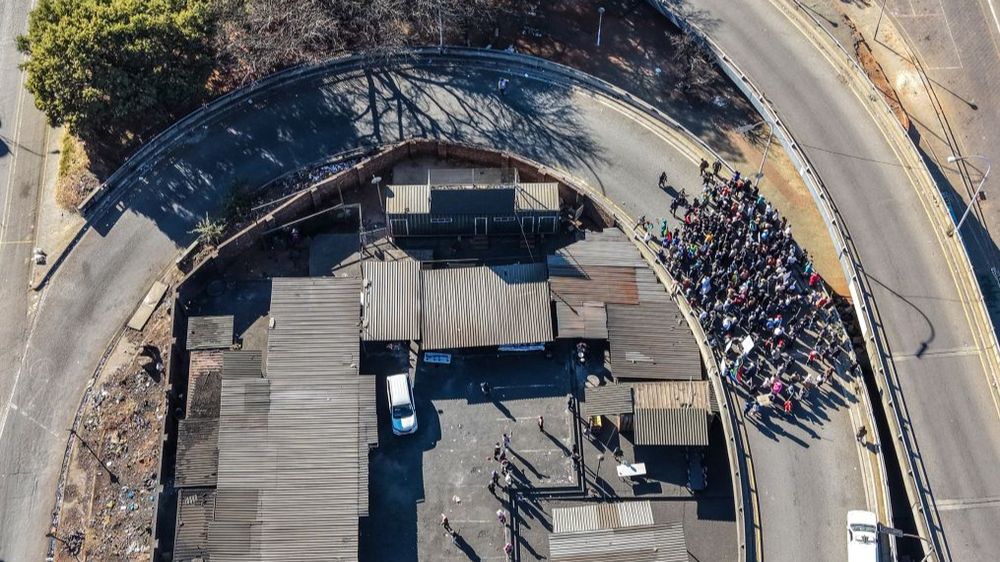
Between 2024 and 2026, governments across the world have intensified the removal of undocumented and irregular migrants. Examining 11 countries; the United States, South Africa, Iran, Pakistan, Türkiye, Germany, France, the United Kingdom, Malaysia, Oman and Kuwait; reveals different circumstances but a common trend: growing public pressure for stronger control over borders and immigration systems. In several countries, immigration has become a major electoral issue, particularly in the United States, South Africa, Türkiye, France, Germany and the United Kingdom. However, elections alone do not explain the trend. Economic insecurity, unemployment, housing shortages, pressure on public services, security concerns and demographic change are also driving support for tougher immigration enforcement.
United States
Following Donald Trump’s 2024 election victory, mass deportation became a central government policy, with the next presidential election due in 2028. Immigration debates are closely tied to border security, crime, employment and housing. However, undocumented migrants cannot credibly be blamed for America’s broader problems of inflation, public debt and inequality. The strongest justification for deportation is therefore the state’s right to enforce its immigration laws rather than attributing wider economic problems to migrants.
South Africa
South Africa recorded more than 109,000 deportations across 2024/25 and 2025/26, while unemployment reached 33.6%, with youth unemployment at 47.4% in the second quarter of 2026. Although the next national election is expected in 2029, migration was already a politically significant issue during the 2024 election. Undocumented labour can contribute to wage pressure and competition in vulnerable sectors, but migrants are not responsible for South Africa’s structural unemployment, weak growth, inequality and governance failures. Deportation can enforce immigration law, but it cannot replace job creation or economic reform.
Iran and Pakistan
Iran’s campaign against undocumented Afghans has produced the largest deportation figures among the countries examined, with approximately 1.26 million Afghans deported in 2025. Iran’s next presidential election is expected in 2028. While migration creates genuine pressures around employment, public services and border management, Iran’s wider economic difficulties are primarily linked to sanctions, inflation, currency weakness and geopolitical tensions.
Pakistan has similarly targeted undocumented Afghans, deporting approximately 155,000 in 2025, with removals continuing into 2026. Security and border control are particularly significant given Pakistan’s regional security environment. However, Afghan migrants cannot reasonably be blamed for the country’s debt, political instability, inflation or energy challenges. In both countries, the strongest justification for deportation is therefore lawful immigration and national-security enforcement, alongside humanitarian consideration for vulnerable people.
Türkiye
Türkiye’s large refugee population, particularly Syrians, has made migration a major political issue following the 2023 elections, with the next scheduled election in 2028. Public support for tougher measures has been influenced by inflation, housing costs, employment concerns and pressure on public services. Migration can intensify these pressures, but it did not cause Türkiye’s currency crisis, inflation or wider economic difficulties. The challenge is therefore to manage migration without presenting migrants as the cause of broader structural problems.
Germany, France and the United Kingdom
Germany recorded 22,787 deportations in 2025, while immigration was a major issue during the February 2025 federal election. The next election is expected in 2029. Public concerns include asylum capacity, housing, integration and pressure on services, alongside wider economic stagnation. Indeed, Germany simultaneously requires legal immigration to address labour shortages and an ageing population.
France recorded more than 23,000 removals in 2025, following its 2024 legislative elections, with the next presidential election due in 2027. Immigration remains closely connected to debates over security, public services and national identity. While France has a legitimate right to remove those without legal status, its fiscal pressures, public debt and economic difficulties have deeper structural causes.
In the United Kingdom, irregular Channel crossings and asylum have become major political issues following the 2024 general election. Housing shortages, pressure on the NHS (National Health Service) and the cost of living have intensified the debate. Unauthorised migration does place pressure on the asylum and accommodation systems, but migrants cannot reasonably be held responsible for Britain’s wider housing, productivity and healthcare problems. Stronger border enforcement is therefore legitimate, but scapegoating is not.
Malaysia, Oman and Kuwait
Malaysia has undertaken large-scale deportations of undocumented workers, particularly from Indonesia, Myanmar and the Philippines, with the next general election expected by 2028. The central challenge is balancing the protection of Malaysian employment with the country’s dependence on foreign labour. Undocumented employment can undermine wages and labour protections, making enforcement legitimate, but foreign workers cannot be blamed for Malaysia’s wider economic challenges.
In Oman, deportations are closely connected to its Omanisation policy, which seeks to increase employment opportunities for citizens. With foreign workers remaining essential to several sectors, the issue is primarily one of lawful residency and labour-market management.
Kuwait deported nearly 40,000 expatriates in 2025, with further removals in 2026. Its unusually large expatriate population makes immigration and residency control a legitimate national concern. However, Kuwait’s deeper economic challenges — including oil dependence, fiscal sustainability and its public-sector model — cannot be attributed to undocumented migrants.
The Bigger Question: Are Migrants Being Blamed for Problems They Did Not Create?
Across these 11 countries, an important distinction emerges: irregular migration can contribute to specific pressures without being the underlying cause of a country’s broader domestic crisis. Undocumented workers can compete for particular jobs, while large migrant populations can place additional pressure on housing, healthcare, education and local government. Security and border-management concerns can also be legitimate.
However, unemployment, inflation, weak economic growth, public debt and failing infrastructure generally have deeper causes. South Africa’s 33.6% unemployment rate, for example, cannot be explained by undocumented migration, just as Britain’s housing crisis, America’s public debt, Germany’s industrial difficulties or Iran’s sanctions-driven economic problems cannot be attributed primarily to migrants.
This does not undermine the sovereign right of states to control their borders. Governments are entitled to determine who may enter, work and reside within their territory. Where an individual has no lawful basis to remain, the state has the right to require that person to leave. Without enforceable immigration laws, the distinction between legal and illegal residence becomes meaningless and public confidence in government can weaken.
At the same time, enforcement does not require abandoning humanitarian principles. Many migrants flee poverty, conflict or persecution, and their circumstances require appropriate consideration under refugee and human-rights law. Governments should therefore distinguish between immigration status and criminality, respect due process and provide protection for genuine refugees and vulnerable children.
The answer is neither open borders nor indiscriminate deportation. Governments can enforce immigration laws, protect citizens and maintain secure borders while recognising that migration is rarely the root cause of wider economic and social problems.
Ultimately, the strongest argument for deportation is not that foreigners are responsible for a country’s problems. It is that a sovereign state has the right and responsibility to determine who may legally live within its borders. The challenge is to exercise that right firmly enough to uphold the law, but fairly enough to ensure that desperation is not treated as criminality and that immigration enforcement does not become a substitute for addressing the domestic problems citizens actually face.
Written by:
*Cole Jackson
*Director of International Relations
Sekunjalo Group Africa Holdings
**The Views expressed do not necessarily reflect the views of Independent Media or IOL.
** MORE ARTICLES ON OUR WEBSITE https://bricscg.com/
** Follow @ (https://x.com/brics_daily)brics_daily (https://x.com/brics_daily)on Twitter for daily BRICS+ updates and instagram @brics_daily (https://www.instagram.com/brics_daily?igsh=bmhvbTd0YzA4a2wx)